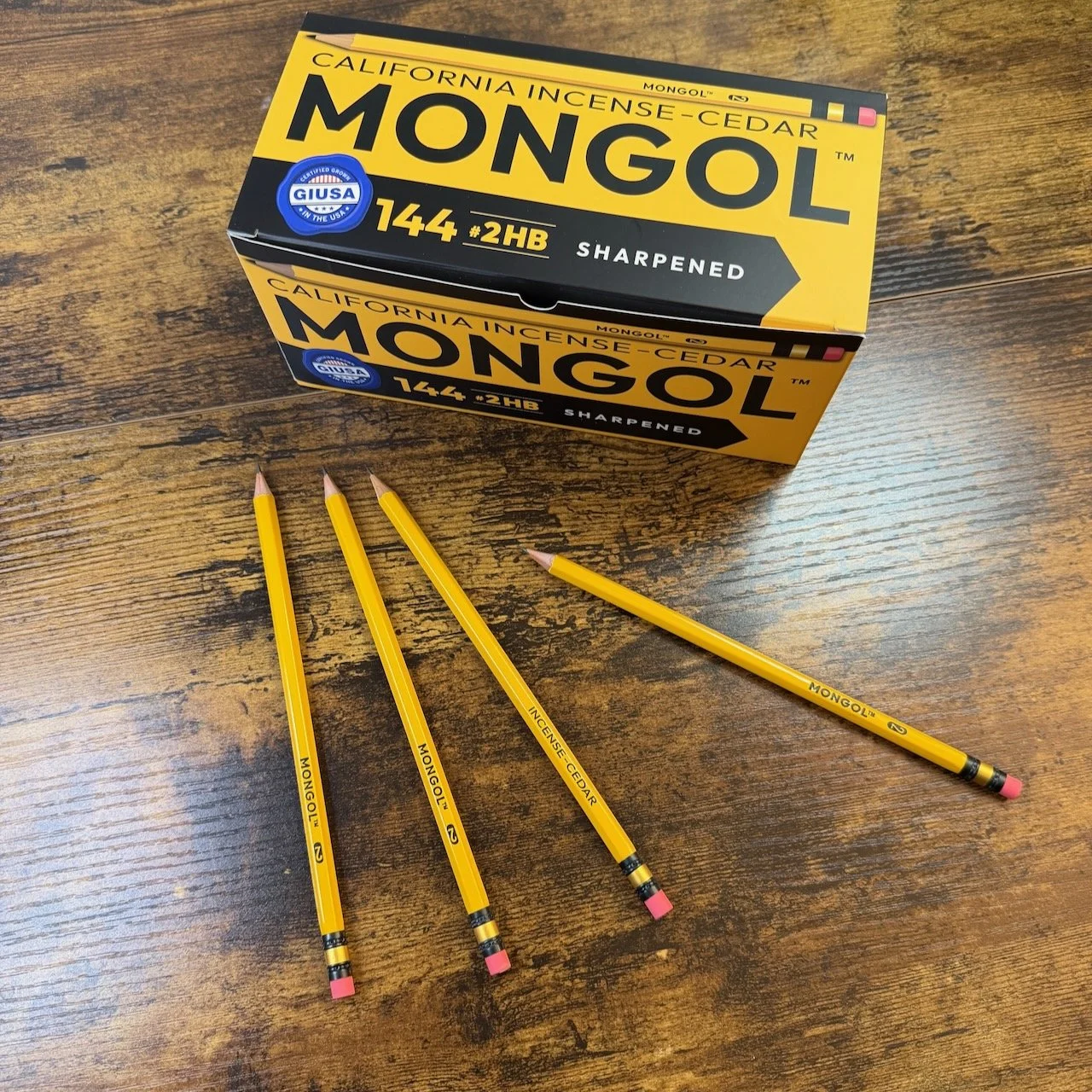
This one surprised me, as the launch came with very little fanfare: the Mongol pencil brand has apparently been reborn. I inadvertently discovered these pencils while browsing one of our distributor websites, and since I collect vintage woodcase pencils, well, I had to pick some up to see if they were worthy of the name.
The new Mongol (bottom) compared against a vintage Mongol 482.
The original Eberhard Faber (later Faber-Castell) Mongol pencil was considered a quality office brand intended for mainstream use, and traditionally sat between inexpensive school-grade pencils and premium options such as the Blackwing. As with most classic pencils, the Mongol line was phased out in the late 1990s-early 2000s amid a wave of corporate consolidations. Basically, everything became a Papermate, and most premium pencil lines disappeared in favor of cheap imports and low-quality economy pencils that caused many people to “write off” wood pencils entirely. You could still find pencils sold under the Mongol brand internationally in countries including Colombia, Venezuela, and the Philippines, but here in the U.S., multiple generations have come and gone without Mongol having any significant presence outside the vintage market.
From bottom: The re-released Mongol, a vintage Faber-Castell Mongol 482, and a Faber-Castell American, which is a school-grade pencil that makes you envy how good even the cheapest pencils were 30 years ago.
Mongol Pencils: Modern vs. Vintage
So how does the modern re-release stack up against the vintage Mongol? Fairly well, actually, especially once you account for the price point and manufacturing shifts that have occurred in the pencil industry over the past 30+ years. The original Mongol pencils were known for their thick bright yellow lacquer, which the modern version faithfully reproduces. I may actually prefer the lacquer on the new pencil to the vintage Faber-Castell Mongol 482, though the thick application adds to the barrel diameter. The imprint on the new pencils, however, is not as clean, and I strongly prefer the legacy branding. I will attribute this one to an effort to keep the price point down and to offer the new Mongol in the same market segment (office use) as the original.
A close-up of the imprint on the new Mongol, which isn’t as crisp as the
But how does it write? Nostalgia aside, it comes down to the writing experience, and this is a good one. Cedar Alliance Ltd (the company that makes Mongol), states that these pencils contain sustainably sourced California Incense Cedar and European graphite while being manufactured in Vietnam. Tombow pencils are also made in Vietnam, and the quality feels similar.
The new Mongol (top) writes an ever-so-slightly darker line.
I prefer darker pencils, and vintage American pencils - including vintage Mongols - often feel a touch light for my preference. The modern Mongol pencil writes a darker line that I prefer even if it sacrifices a bit of point retention. The eraser is excellent, both functionally and visually, retaining the banded black-and-gold ferrule and bright pink color.
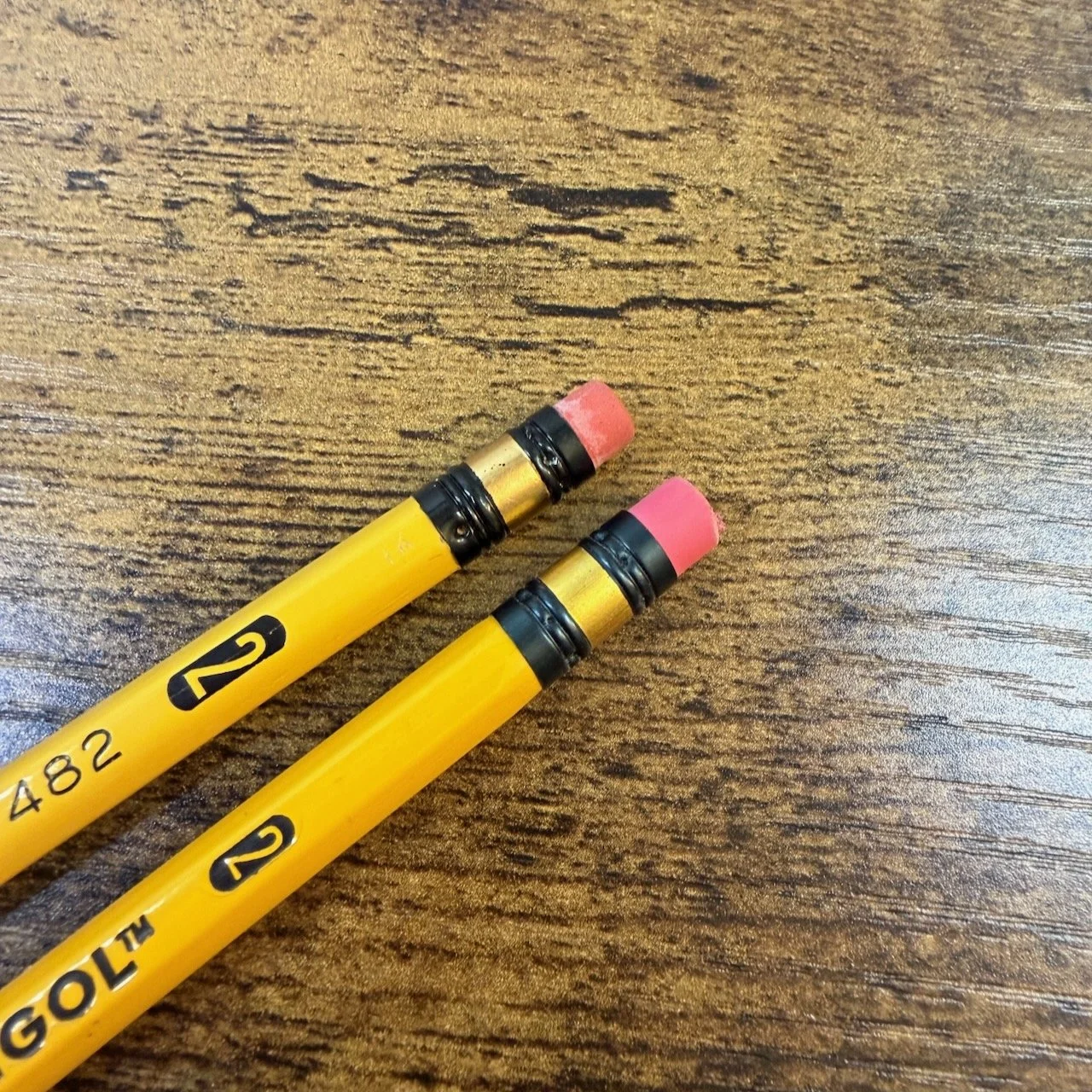
The vintage-style erasers are a classic touch.
So what’s the verdict? I wouldn’t hesitate to recommend these pencils, especially for those looking for a high quality school or office pencil that can be purchased in bulk. For example, 144 Mongols will set you back $36.95. Are the Mongols as “nice” as a Blackwing? No, but they’re a heck of a lot better than what you will currently get from the big box stores or school suppliers for around the same amount of money. You can also buy a pack of 48, and we sell them individually if you would like to try a single pencil.
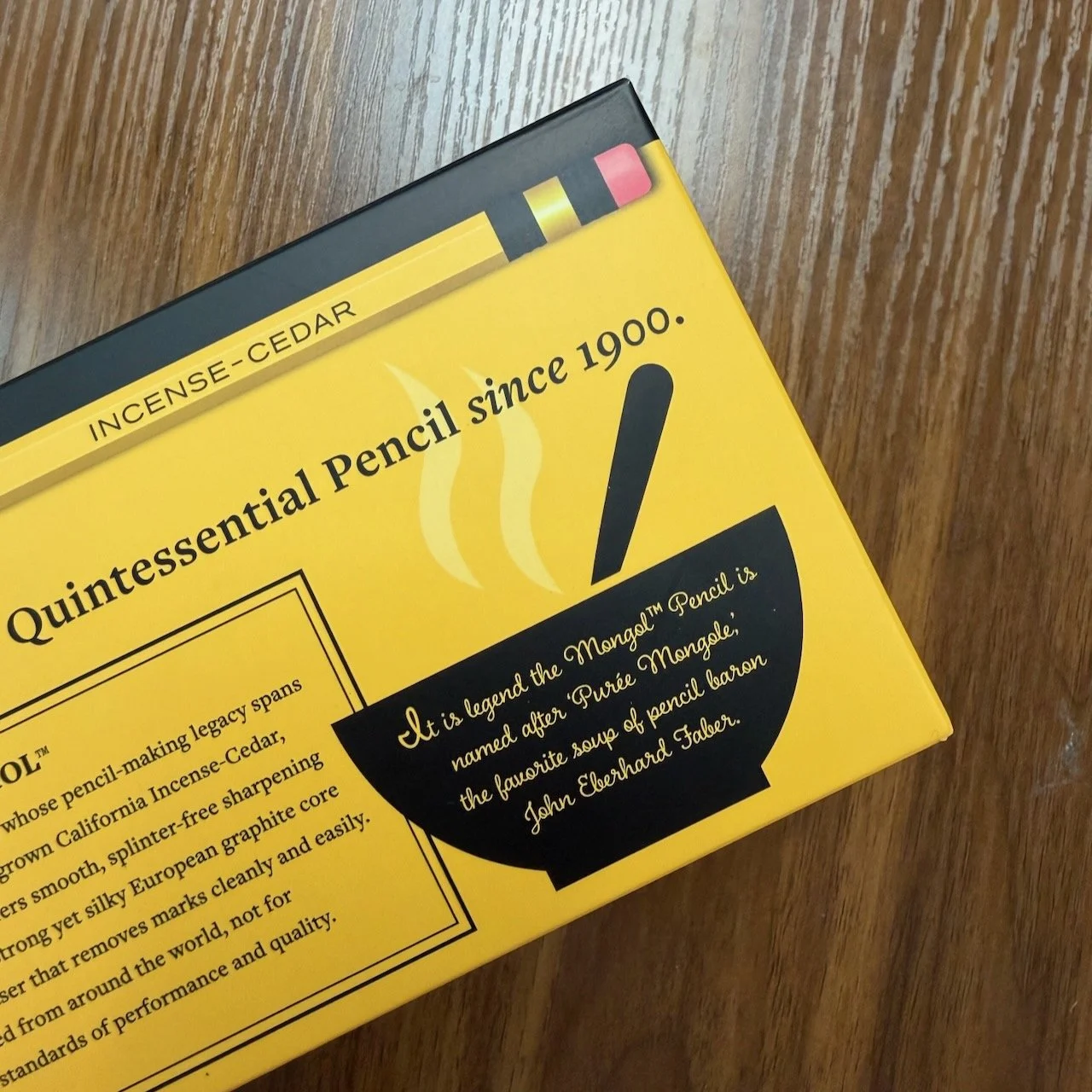
A bit of a history lesson! The name “Mongol” allegedly comes from “Purée Mongole,” a yellow split-pea soup that was a favorite of “pencil baron” John Eberhard Faber.
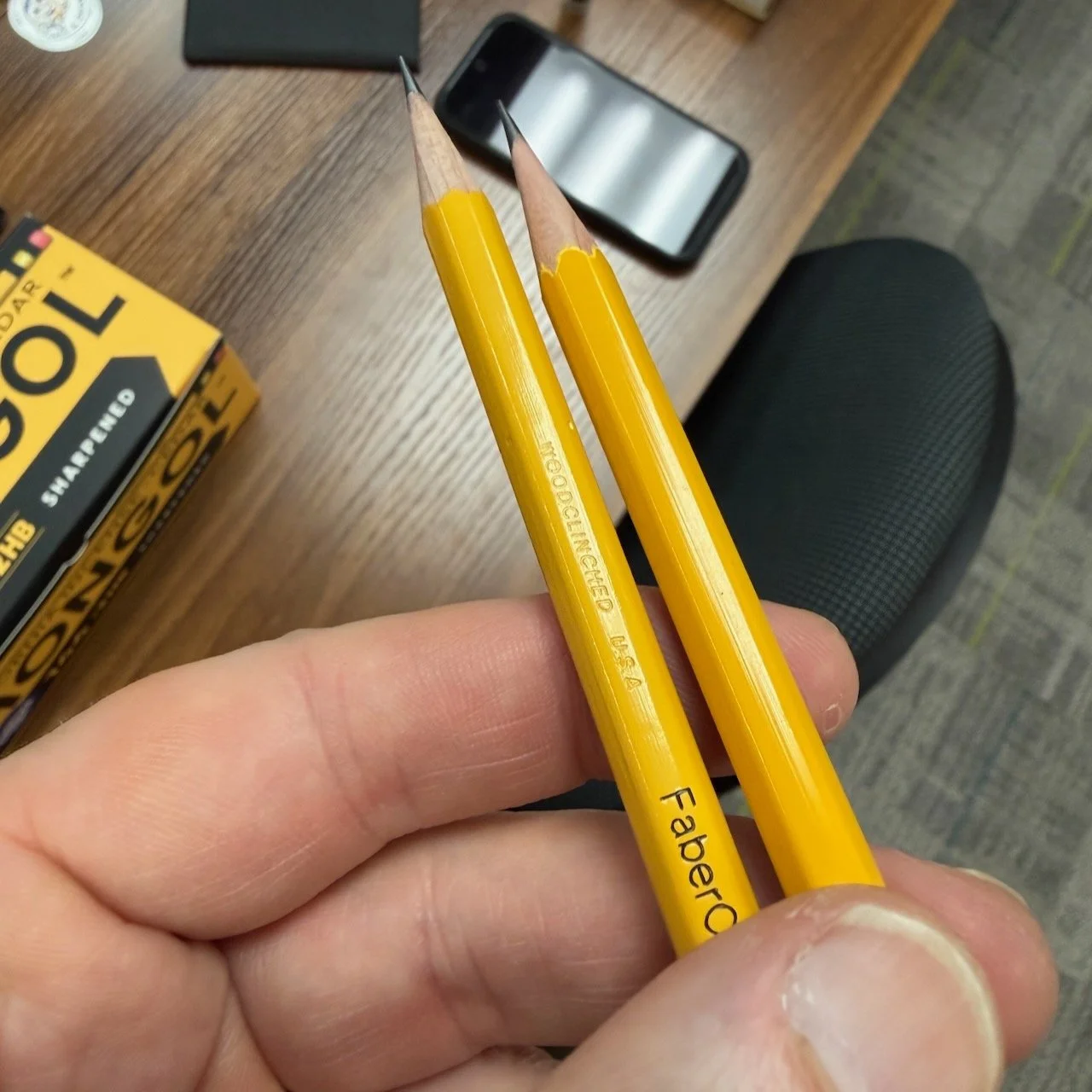
Alas, what don’t you get? The “Woodclinched U.S.A.” imprint you used to find on the original.
Bonus: My Current Top 5 Woodcase Pencils for Everyday Writing
While I’m on the subject of wood pencils, I’ve received several submissions requesting that I update my “Top 5 Woodcase Pencils for Everyday Writing.” One note - while I won’t add the new Mongol to this list yet, if the pencil takes off and remains steadily available, I could see this pencil making an appearance due to the value proposition it offers. But not yet. Here are my current Top 5, which you can compare against the old list.
Tombow 2558 (B). Tombow makes exceptionally high quality pencils for the price point, and this particular model is one of the best classic No. 2’s out there. The 2558 writes a smooth dark line in both HB and B grade, the eraser erases cleanly, and the lacquer is impeccably finished. 10/10
Viarco 2001 (HB or B). I’ve always preferred a slightly gritty texture to my graphite - not enough to make the pencil scratchy, but just enough to add tactility to the writing experience. I can’t stand overly waxy pencils. Viarco pencils have the perfect feel, and there’s the added historical charm to writing with a pencil made in one of the last operating European pencil factories.
Camel (HB). Part of this pencil’s allure is the integrated eraser, which sits flush with the barrel, but Camel pencils also use excellent graphite and feature a finish that you would expect from a premium Japanese writing pencil.
Mitsubishi 9850 (HB). This classic Japanese office pencil pairs a red lacquer barrel with a white eraser. Apparently I’m not the only one who loves these things, as they are insanely difficult to keep in stock.
Blackwing Natural (Extra-Firm). Sure, it’s a premium option for everyday writing, but the natural finish on these pencils remains a favorite and the extra-firm graphite ensures that your pencils will last a long time. The Natural has become my go-to pencil from Blackwing’s lineup.
All of these pencils have great imprints, in my opinion. In addition to being quality writing instruments, they’re visually interesting desk objects that retain their respective brands’ heritage.
The Gentleman Stationer is supported by purchases from the T.G.S. Curated Shop and pledges via the T.G.S. Patreon Program. You can also come visit us at our physical stationery store in Nashville, Tennessee.