• Blog
  • Shop
  • Podcast
  • Resources
  • Archive
  • FAQ
  • About
  • Contact
  • Sign In My Account
Menu

The Gentleman Stationer

  • Blog
  • Shop
  • Podcast
  • Resources
  • Archive
  • FAQ
  • About
  • Contact
  • Sign In My Account
New Re-released Mongol Pencil from Cedar Alliance

Hands-on with the New Mongol Pencil, Plus My Current Top 5 Woodcase Pencils for Everyday Writing

October 3, 2026

This one surprised me, as the launch came with very little fanfare: the Mongol pencil brand has apparently been reborn. I inadvertently discovered these pencils while browsing one of our distributor websites, and since I collect vintage woodcase pencils, well, I had to pick some up to see if they were worthy of the name.

The new Mongol (bottom) compared against a vintage Mongol 482.

The original Eberhard Faber (later Faber-Castell) Mongol pencil was considered a quality office brand intended for mainstream use, and traditionally sat between inexpensive school-grade pencils and premium options such as the Blackwing. As with most classic pencils, the Mongol line was phased out in the late 1990s-early 2000s amid a wave of corporate consolidations. Basically, everything became a Papermate, and most premium pencil lines disappeared in favor of cheap imports and low-quality economy pencils that caused many people to “write off” wood pencils entirely. You could still find pencils sold under the Mongol brand internationally in countries including Colombia, Venezuela, and the Philippines, but here in the U.S., multiple generations have come and gone without Mongol having any significant presence outside the vintage market.

From bottom: The re-released Mongol, a vintage Faber-Castell Mongol 482, and a Faber-Castell American, which is a school-grade pencil that makes you envy how good even the cheapest pencils were 30 years ago.

Mongol Pencils: Modern vs. Vintage

So how does the modern re-release stack up against the vintage Mongol? Fairly well, actually, especially once you account for the price point and manufacturing shifts that have occurred in the pencil industry over the past 30+ years. The original Mongol pencils were known for their thick bright yellow lacquer, which the modern version faithfully reproduces. I may actually prefer the lacquer on the new pencil to the vintage Faber-Castell Mongol 482, though the thick application adds to the barrel diameter. The imprint on the new pencils, however, is not as clean, and I strongly prefer the legacy branding. I will attribute this one to an effort to keep the price point down and to offer the new Mongol in the same market segment (office use) as the original.

A close-up of the imprint on the new Mongol, which isn’t as crisp as the

But how does it write? Nostalgia aside, it comes down to the writing experience, and this is a good one. Cedar Alliance Ltd (the company that makes Mongol), states that these pencils contain sustainably sourced California Incense Cedar and European graphite while being manufactured in Vietnam. Tombow pencils are also made in Vietnam, and the quality feels similar.

The new Mongol (top) writes an ever-so-slightly darker line.

I prefer darker pencils, and vintage American pencils - including vintage Mongols - often feel a touch light for my preference. The modern Mongol pencil writes a darker line that I prefer even if it sacrifices a bit of point retention. The eraser is excellent, both functionally and visually, retaining the banded black-and-gold ferrule and bright pink color.
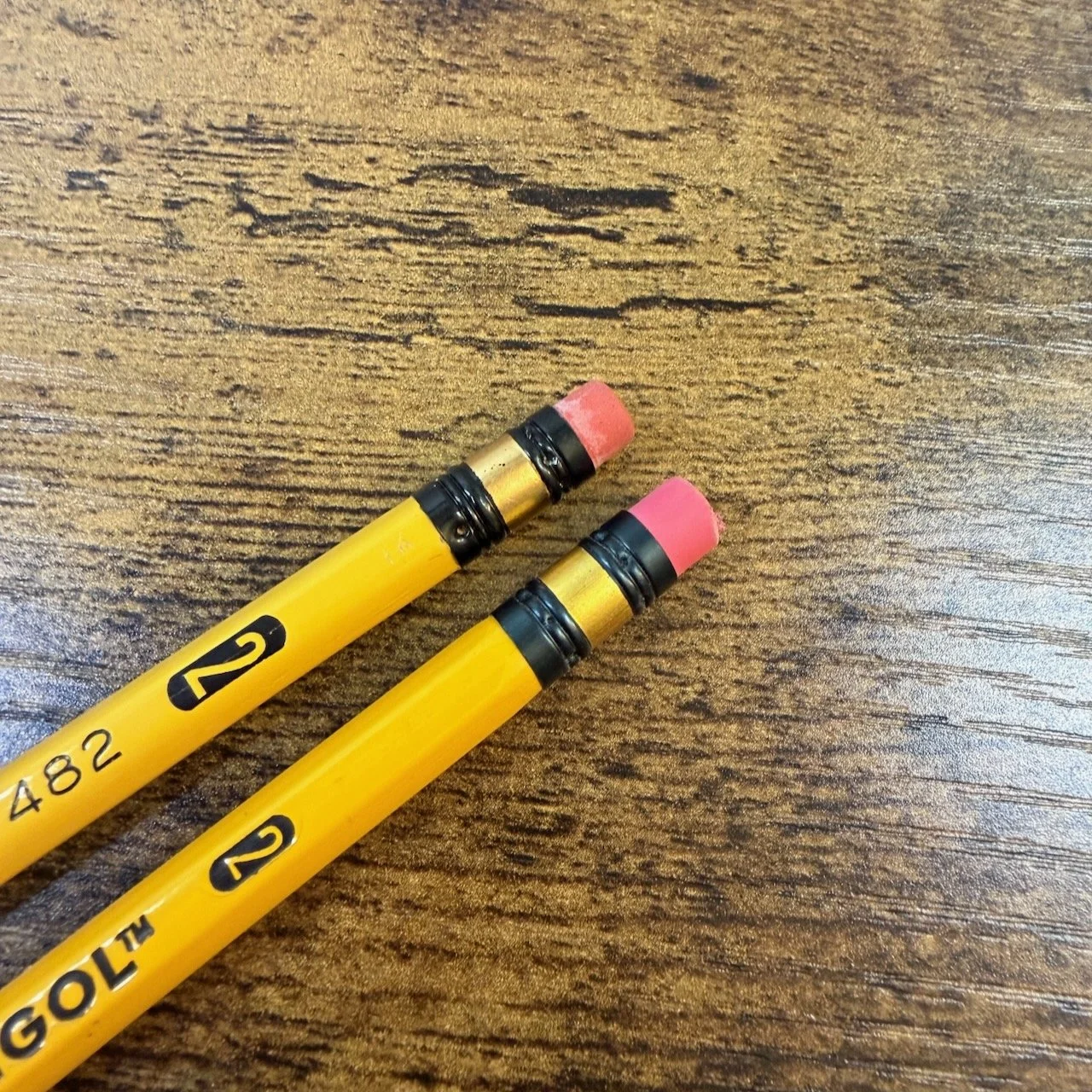
The vintage-style erasers are a classic touch.

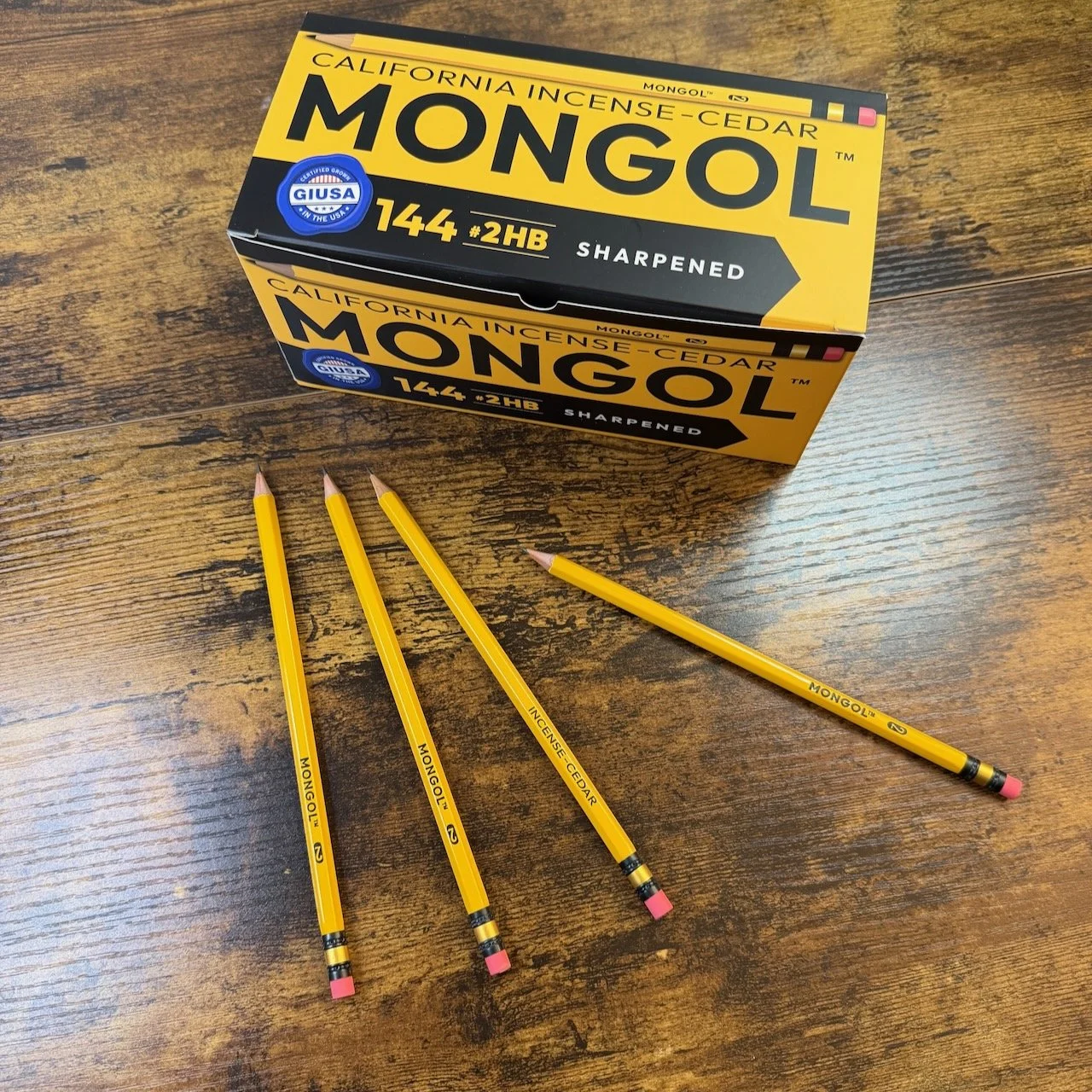
So what’s the verdict? I wouldn’t hesitate to recommend these pencils, especially for those looking for a high quality school or office pencil that can be purchased in bulk. For example, 144 Mongols will set you back $36.95. Are the Mongols as “nice” as a Blackwing? No, but they’re a heck of a lot better than what you will currently get from the big box stores or school suppliers for around the same amount of money. You can also buy a pack of 48, and we sell them individually if you would like to try a single pencil.
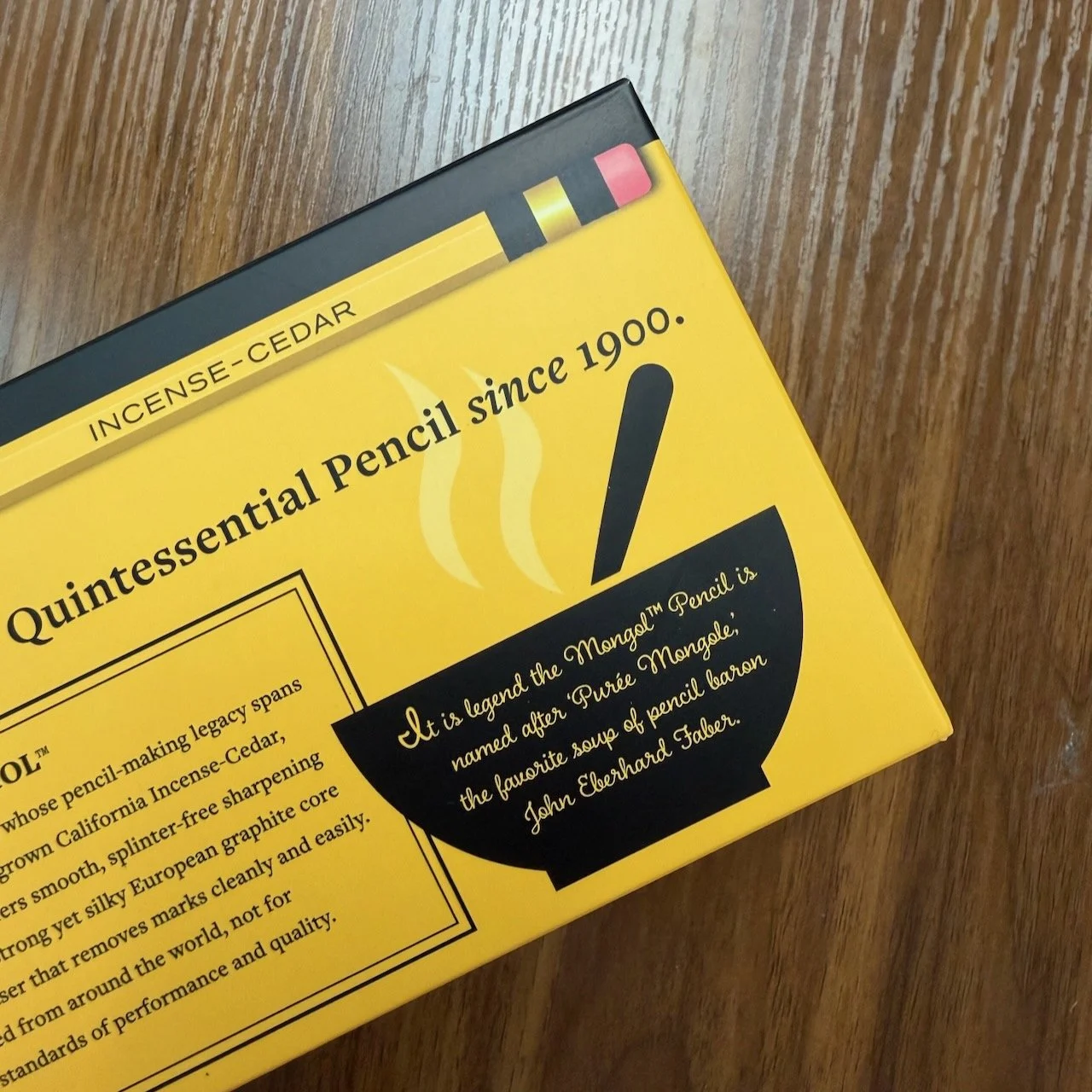
Mongol-pencil-history-label.jpeg

A bit of a history lesson! The name “Mongol” allegedly comes from “Purée Mongole,” a yellow split-pea soup that was a favorite of “pencil baron” John Eberhard Faber.
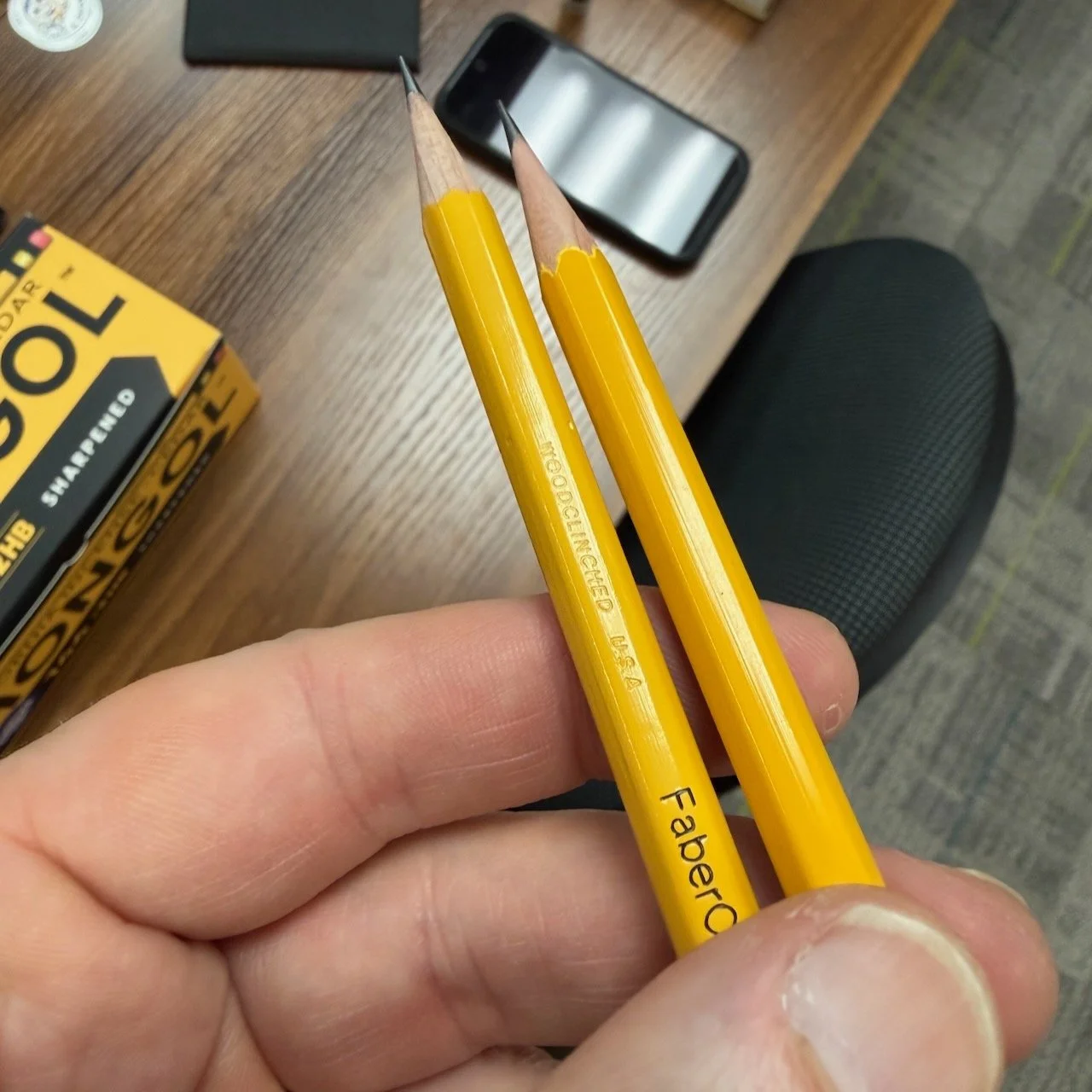
Woodclinched USA Imprint on a vintage Mongol Pencil

Alas, what don’t you get? The “Woodclinched U.S.A.” imprint you used to find on the original.

Bonus: My Current Top 5 Woodcase Pencils for Everyday Writing

While I’m on the subject of wood pencils, I’ve received several submissions requesting that I update my “Top 5 Woodcase Pencils for Everyday Writing.” One note - while I won’t add the new Mongol to this list yet, if the pencil takes off and remains steadily available, I could see this pencil making an appearance due to the value proposition it offers. But not yet. Here are my current Top 5, which you can compare against the old list.

  1. Tombow 2558 (B). Tombow makes exceptionally high quality pencils for the price point, and this particular model is one of the best classic No. 2’s out there. The 2558 writes a smooth dark line in both HB and B grade, the eraser erases cleanly, and the lacquer is impeccably finished. 10/10

  2. Viarco 2001 (HB or B). I’ve always preferred a slightly gritty texture to my graphite - not enough to make the pencil scratchy, but just enough to add tactility to the writing experience. I can’t stand overly waxy pencils. Viarco pencils have the perfect feel, and there’s the added historical charm to writing with a pencil made in one of the last operating European pencil factories.

  3. Camel (HB). Part of this pencil’s allure is the integrated eraser, which sits flush with the barrel, but Camel pencils also use excellent graphite and feature a finish that you would expect from a premium Japanese writing pencil.

  4. Mitsubishi 9850 (HB). This classic Japanese office pencil pairs a red lacquer barrel with a white eraser. Apparently I’m not the only one who loves these things, as they are insanely difficult to keep in stock.

  5. Blackwing Natural (Extra-Firm). Sure, it’s a premium option for everyday writing, but the natural finish on these pencils remains a favorite and the extra-firm graphite ensures that your pencils will last a long time. The Natural has become my go-to pencil from Blackwing’s lineup.

All of these pencils have great imprints, in my opinion. In addition to being quality writing instruments, they’re visually interesting desk objects that retain their respective brands’ heritage.

The Gentleman Stationer is supported by purchases from the T.G.S. Curated Shop and pledges via the T.G.S. Patreon Program. You can also come visit us at our physical stationery store in Nashville, Tennessee.
In Pencils, Pencil Review Tags Mongol Pencils, New Mongol Pencil, Woodcase Pencils, Pencil Review, Top 5

Comparing Two Popular Multi Pen Systems: Pilot Hi-Tec-C Coleto and Uni Style Fit

April 8, 2026

One frequent question I receive in-store (and certainly at the San Francisco Stationery Fest last month) concerns the similarities and differences between the two most popular multi pen “systems” on the market: Pilot’s Hi-Tec-C Coleto and Uni’s Style Fit. While both pens look very different, they tend to generally function in the same way and which system works best for you is largely a matter of personal preference as to tip style and ink. I'll thought it might be helpful to give a brief overview.

The Coleto refill (left) and the Style Fit refill look very different.

Similarities Between the Hi-Tec-C Coleto and Style fit Systems

  • Both use proprietary refills. The most common question I received is whether you can use a Hi-Tec-C refill in a Uni Style Fit multi pen and vice-versa. The answer is no (at least not without heavy modification that is beyond the scope of this article). Each refill uses a proprietary design that fits the pen bodies sold by Pilot and Uni, respectively. That said, oddly enough, Uni Style Fit refills will fit inside the excellent Pilot 4+1 wood multi pen.

  • Both feature multiple tip sizes from .28mm to .5mm. The Hi-Tec-C Coleto and Style Fit feature a similar range of ultra-fine to fine tip sizes, which is what many people enjoy about these two systems. The Style Fit’s .28mm refill is roughly equivalent to the Hi-Tec-C Coleto’s .3mm, the .38mm to the .4mm, etc.

  • Both feature a broad range of colored gel inks. Each brand offers well over a dozen colors from which you can choose (15 for the Hi-Tec-C and 16 for the Style Fit). The color ranges are similar, and most people will be able to find a rotation of colors that works for them. I personally go for a mix of blue-black, red, orange, and green.

Conical Style Fit tip (left) and Needle-point Hi-Tec-C tip (right).

Differences Between the Hi-Tec-C Coleto and the Style Fit SYstems

  • Conical vs. Needle Tip. The Hi-Tec-C’s signature feature is the needle tip, which can be hard to find in a multi pen and is therefore what makes the Coleto system unique. The Style Fit uses a standard conical tip (think Signo DX) and writes more like a traditional gel pen. While a matter of personal preference, I prefer the Hi-Tec-C for the type of writing I tend to do with multi pens.

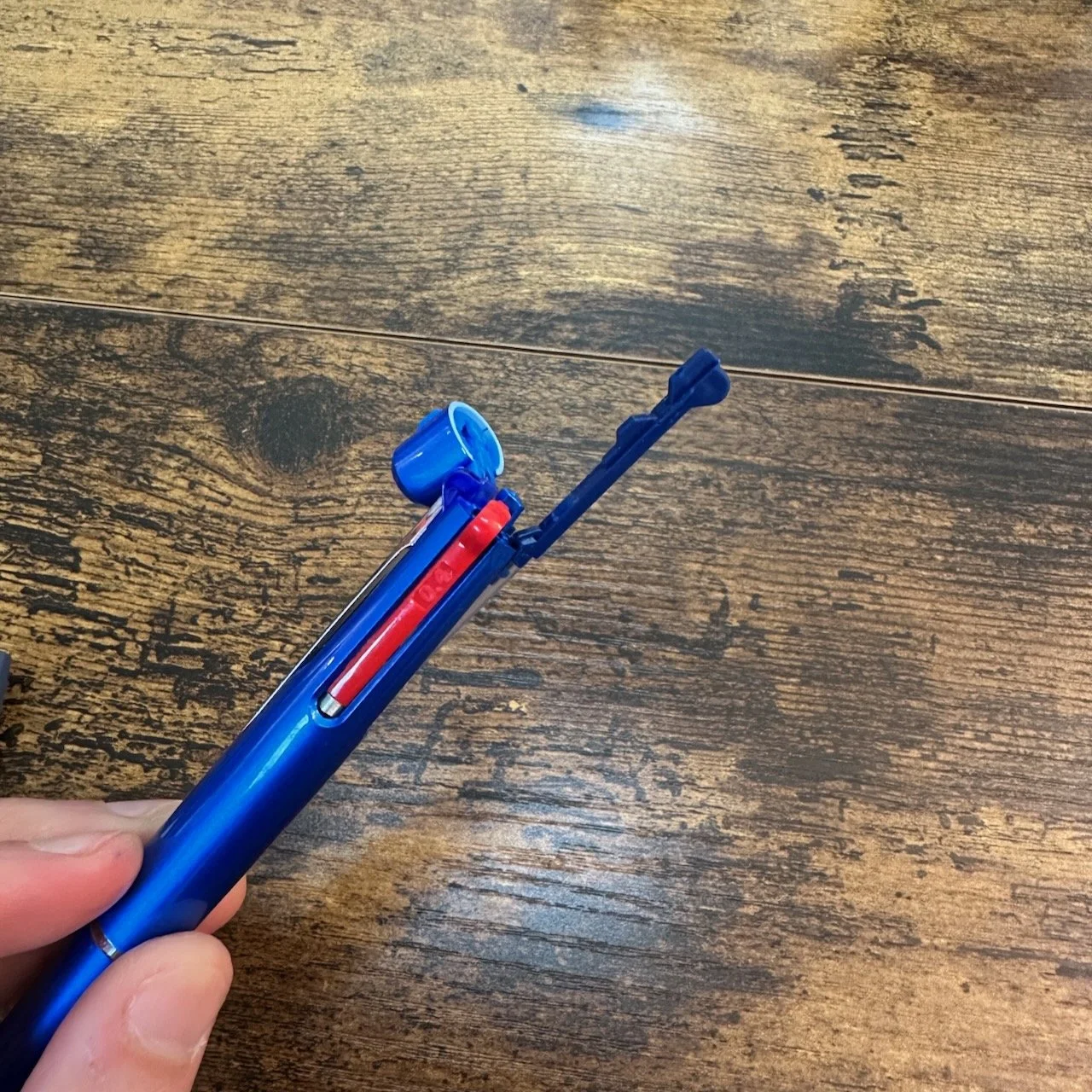
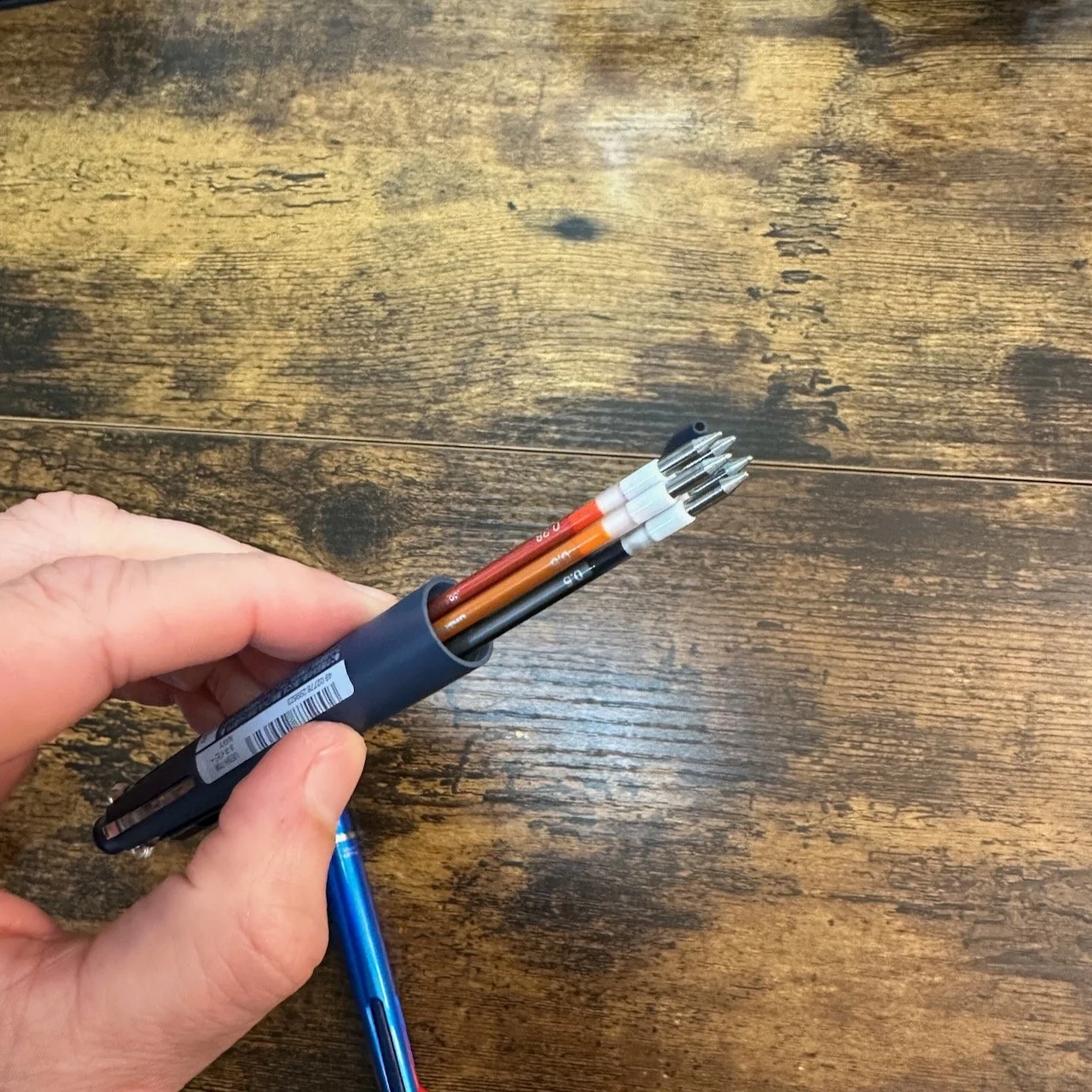
  • The refills load differently. The Hi-Tec-C refills load from the top of the pen body. You flip the cap up and insert the refills into spring-loaded slots, with the matching tabs denoting which colors you have in the pen. The Style Fit pen bodies unscrew from the middle of the barrel, and you insert the refills from the bottom. Most Style Fit bodies feature an ink window so you can see which colors you have loaded into the pen.

  • Hi-Tec-C refills have a slightly greater tendency to clog. While gel refills in general are prone to evaporate over time, and it’s therefore best practice to use them regularly once you remove them from the sealed package, the Hi-Tec-C needle tip is more prone to clogging as the refill ages, particularly in the finer sizes. (.28mm, anyone?) Uni uses a slightly wetter ink formulation that tends to flow better but runs out quicker.

View fullsize Hi-Tec-C-Coleto Refill Holder
View fullsize Uni Style Fit Refill Holder
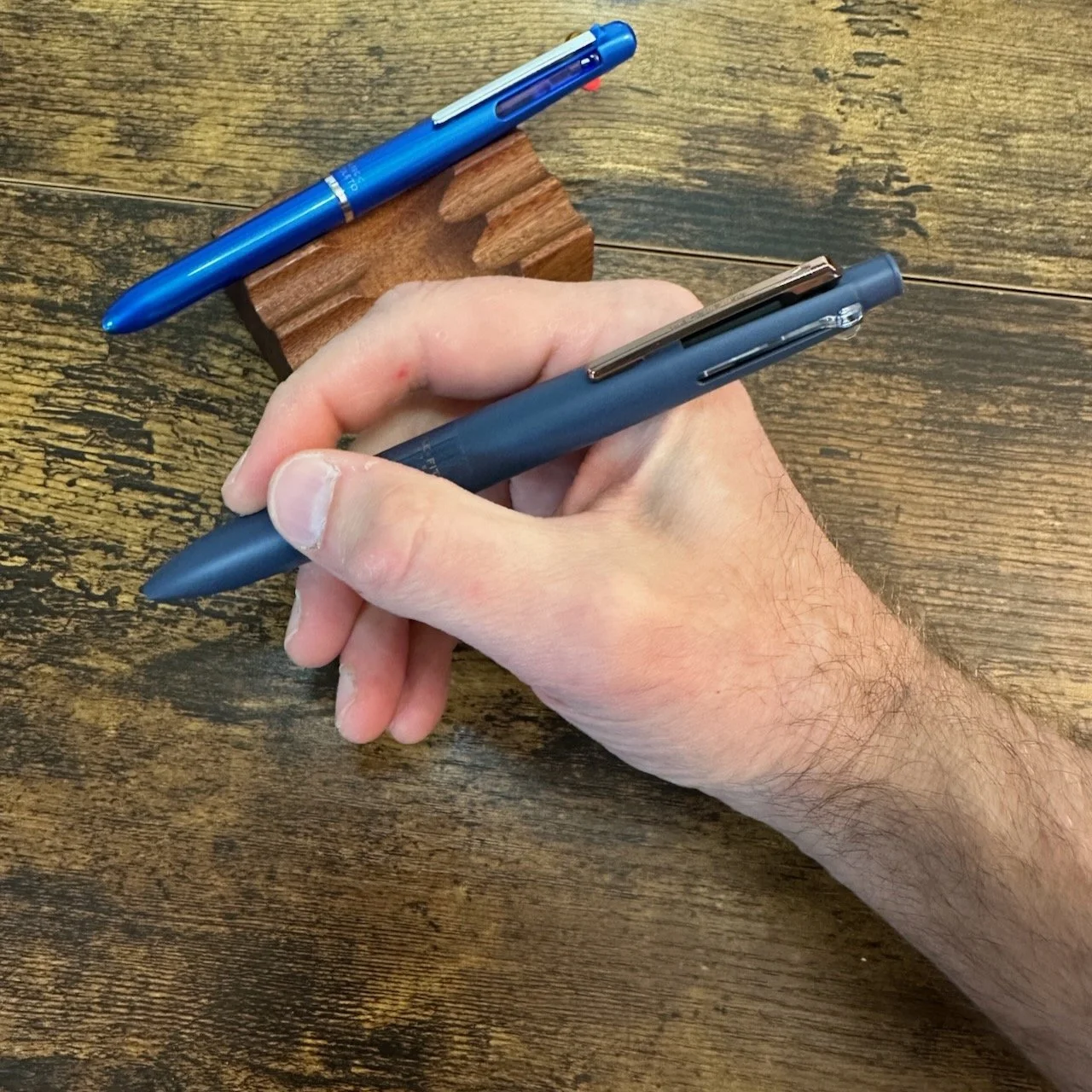
View fullsize Uni Style Fit Meister in-hand
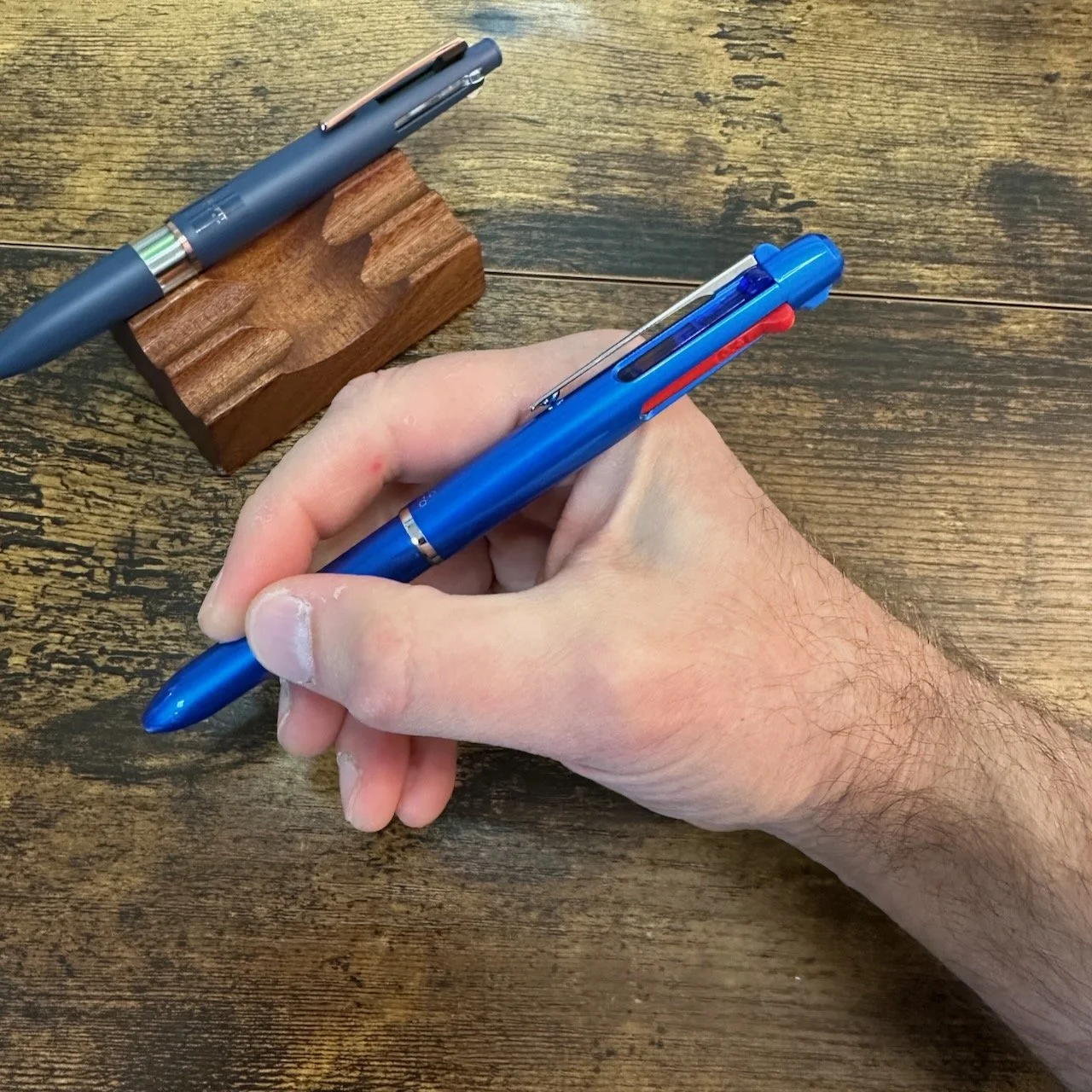
View fullsize Pilot Hi-Tec-C Coleto in-hand

Takeaways and Where to Buy

Both the Coleto and the Style Fit make excellent choices for a fine tip gel multi pen, and which specific pen will work for you ultimately depends on whether you prefer conical or needle-style tips and the feel of the respective Pilot or Uni inks. There’s not a significant cost difference, with both pens available in the $20-25 range even for the most expensive pen body with a set of refills.

As I’ve mentioned before, the Pilot Hi-Tec-C Coleto is the multi pen that first hooked me on ultra-fine Japanese gel pens. I personally enjoy needle-tip pens like the Hi-Tec-C and the Pentel Energel, since I feel like these give me more control over my lines when I’m writing small (particularly for annotation). The .4mm refill is my personal sweet spot. That said, the Style Fit is also an excellent gel multi pen, and those who prefer a larger pen body may find the “Meister” more comfortable to hold. The navy blue pen pictured in this review is loaded with five colors in the .5mm tip size, which work well for everyday writing.

We currently carry both the Coleto and Style Fit multi pen bodies as well as refills for both systems, in our online and Nashville shops. Please stop by and see us during normal store hours for the opportunity to test these pens in person!

In Pencil Review Tags Hi-Tec-C, Multi Pens, Hi Tec C Coleto
1 Comment

The Pilot "Custom" Series: An Overview of Some of My Favorite Fountain Pens

March 14, 2026

I think of Pilot’s “Custom” series as containing the brand’s signature pens - effectively their standard lineup. While there are regular models that don’t bear the “Custom” designation (i.e. E95s, Capless Vanishing Point and Decimo), the Custom pens present a broad example of what the company can do, and it’s long past time I photographed them alongside each other. In both the T.G.S. Shop and my own personal collection, Pilot outnumbers any other mainstream brand due to their solid build quality and exceptional nibs, which in my experience rarely need tuning or modification out of the box. I will give a brief overview of each pen, and highlight a few key aspects of each one. Where applicable I have linked to a more in-depth T.G.S. review of each pen, and of course I’ll share my favorites at the end!

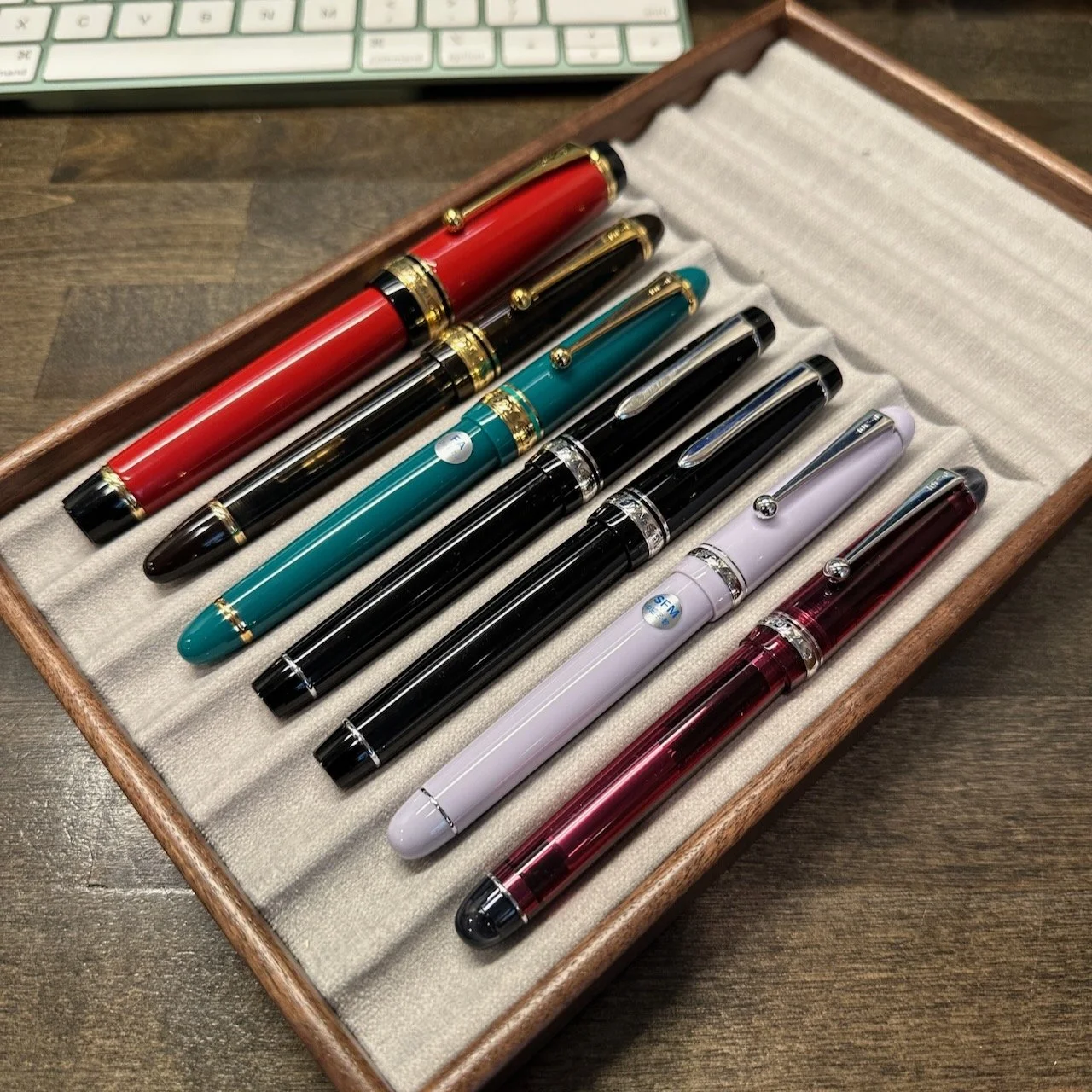
I haven’t done this exercise before: All of the Pilot Custom pens side-by-side. From top: Pilot Custom Urushi, Pilot Custom 823, Pilot Custom 743, Pilot Custom 912 x 2 (PO and WA nibs), Pilot Custom 74 Lavender Fog, Pilot Custom 74 Merlot.

Pilot Custom 74

The entry point to Pilot's Custom line, the Custom 74 features a classic streamlined torpedo shape and Pilot's No. 5 14kt nib. The pen ships with the CON-70 pump converter (Pilot's largest) so you can write with bottled ink out of the box. At $216, I still consider the Custom 74 one of the best value propositions on the Japanese pen market, notwithstanding the recent price increases. Going forward, it will be uncommon to find gold-nib pens at the sub-$300 price point, and the Custom 74 remains priced below many "boutique" brands that feature standard JoWo or Bock steel options. (Priced at $216 standard, $240 for the Lavender Fog Special Edition - TGS Shop)

Pilot’s No. 5 Nib (Custom 74 and Custom Heritage 92, left) next to the Pilot No. 10 Nib (Custom 912).

Pilot Custom 912

For a long time, the Custom 912 remained largely unavailable to the U.S. market and had to be purchased directly from Japan. Featuring a No. 10 14kt nib, which is slightly larger than the No. 5 on the Custom 74 and Custom Heritage 92, the Custom 912 features a flat top design and a sword-style clip. Still relatively accessible price-wise, the Custom 912 opens the door to Pilot's specialty nib line, including the PO (Posting), WA (Waverly), and FA (Falcon) nibs, as well as the "Soft" series. (Priced at $296 for Standard - TGS Shop)

The crystal clear Custom Heritage 92.

Pilot Custom Heritage 92

The lone piston filler on this list, the Pilot Custom Heritage 92 features a flat-top design and clip similar to the Custom 912 but has the same smaller No. 5 nib as the Custom 74. Sometimes overlooked due to the fact that color options are limited, the Custom Heritage 92 is a spectacular pen that I regret having sold off from my personal collection back when the transparent orange demonstrator was still available. (I wanted a broader nib and wrongly assumed I would be able to get another one.) The piston mechanism is exceptionally smooth and the polishing work on the transparent resin top notch. If you're looking for a demonstrator that will showcase your ink collection this one should be on your list. (Priced at $264 standard - TGS Shop)

The Pilot Custom 743 (left in the North American Exclusive Verdigris Green) next to the Pilot Custom 823. These two pens are mostly the same with the exception of the vacuum filling system on the 823.

Pilot Custom 743

The Custom 743 features an even larger No. 15 nib (also 14kt), and the same longer streamlined body style as the more-expensive Custom 823, though with a CON-70 converter instead of the vacuum-filling mechanism. Like the Custom Heritage 912, Pilot makes the Custom 743 available with their range of specialty nibs, though the pen only comes with gold trim so those who prefer chrome or Rhodium are stuck with the 912. (Priced at $392 - TGS Shop)

Shown here in a Nagasawa 5-Pen Kip Leather Zippered case from left, the Custom 823, Custom Urushi, Custom 743, Custom 74, and Custom 912.

Pilot Custom 823

It's truly a toss-up as to whether the Custom 823 or the Custom 74 is the more popular pen, but we sell a lot of Custom 823 fountain pens simply because many people - especially those who write a lot and don't want to refill frequently - absolutely love the high-capacity vacuum-filling system. You can watch a demonstration of how it works here. The Custom 823 comes in three different transparent demonstrator finishes (Clear, Smoke, and Amber), with a 14kt No. 15 nib. Gold trim only - sorry Rhodium fans! (Priced at $416 - TGS Shop)

The larger nibs from the Custom Series, from left: No. 15 FA (Custom 745); No. 15 Medium (Custom 823), and No. 30 Medium (Custom Urushi).

Pilot Custom 845

Here is where things start getting really "Fancy" (capital “F”). The Custom 845 represents an entry point into the Pilot Urushi line, with Black, Vermillion, and Prussian Blue lacquer finishes. While the nib is the same No. 15 size as the Custom 823 and Custom 743, it's 18kt instead of 14kt, and features a two-toned gold/rhodium finish. Currently the Custom 845 is the only Pilot Custom Series pen not represented in my own collection, as I'm holding out for a Prussian Blue in the nib size that I want. (Priced at $1000 - Vanness Pens)

Many thanks to Lisa Vanness for the photograph of the coveted Pilot Prussian Blue Custom Urushi, shown here compared against the Custom 823 for scale.

Pilot Custom Urushi

By far the most expensive pen in my own personal collection, the Custom Urushi is relatively massive but the No. 30 nib is sublime with a softness/springiness akin to the Pelikan M1000 - in my opinion, better. The key consideration here for those considering a Custom Urushi is size - both of the pen itself and the price tag. Larger gold nibs like these are always expensive, and when you combine gold with Urushi lacquerwork, it's simply going to be a higher-priced item. That said, a Custom 845 or Custom Urushi is often the capstone of many users' collections. (Priced at $1700 - Vanness Pens)

From left: Custom 912, Custom 74, and Custom 823.

Ranking My Three Personal Favorites Here

We can end this little overview with a personal reflection. I'm going to confess that I'm personally very biased towards Pilot because I love their nibs - their medium nibs especially. They write how I like a gold medium nib to write, with the perfect amount of ink flow. A Pilot medium remains my default when the coveted fine-medium is unavailable. As mentioned above, Pilot is the most-represented mainstream pen brand in my personal collection, and these "top three" appear more than once with me owning multiple colors and nib sizes. That said, the ranking below is driven purely by personal preference, not which pens from the Custom series I feel are objectively better:

  1. Pilot Custom 74. Because of the excellent size for everyday carry, and overall value. I think of the Custom 74 as a workhorse in the same way I think of the Lamy 2000.

  2. Pilot Custom 912. Waverly Nib. All I need to say. Look for a review of this pen/nib combination coming soon.

  3. Pilot Custom 823. I own two: A medium Amber that I had ground to a Kodachi and a fine Smoke. When I want to travel with a few pens that won't need refilling, these are top options since they're effectively ink tanks with a shutoff valve that makes them great for air travel.
    On my list: I will eventually add a Custom Heritage 92 and Pilot Custom 845, because I want to round out the collection and a Prussian Blue Urushi pen calls to me.

Bonus feature: We toured Pilot North American HQ in a recent episode of the On The Paper Trail Podcast!

The Pilot Kakuno is a $15-20 pen that has exploded in popularity, as evidenced by the size of our recent Kakuno Madoromi restock.

A Note on Pricing

I fully understand that whether pricing on these pens is "accessible" is relative. This article addresses a specific line of gold-nib fountain pens which, regardless of what they cost 10 years ago, are expensive luxury purchases that going forward will likely be even more expensive due to rising material costs, tariffs, geopolitical considerations and myriad other factors that are well beyond the scope of this article. The purpose here is not to debate how much things "should" cost, but rather to provide an overview of a popular line of pens that I personally enjoy and believe remain mostly competitively priced in today's current market environment, especially where companies already have pushed some steel nib pens north of $250. For the record, Pilot makes excellent pens at all price points, with the Pilot Kakuno (from $15), Pilot Explorer ($26), and Pilot Prera ($67.50) all warranting serious consideration as both pens for beginners as well as everyday workhorse writers for experienced users.

The Gentleman Stationer is supported by purchases from the T.G.S. Curated Shop and pledges via the T.G.S. Patreon Program. You can also come visit us at our physical stationery store in Nashville, Tennessee.
In Pencil Review, Editorial Tags Pilot Custom 74, Pilot Custom Heritage 92, Pilot Custom Series, Pilot Custom 743, Pilot Custom 823, Pilot Custom Urushi

Pen Review: The Kaweco Perkeo, On Its Own Merits

January 11, 2025

Today’s review looks at a lower-priced pen that seems to be growing in popularity as a sleeper workhorse: the Kaweco Perkeo. I sometimes see the Perkeo dismissed as Kaweco’s “other inexpensive pen,” for those who feel the Kaweco Sport is too small, or as a “first fountain pen”. I’ve tried the Perkeo many times over the years, but have never fully reviewed the pen until now. It tends to fall off my radar because other pens in this price bracket receive more attention and publicity, like the Pilot Kakuno and Platinum Prefounte/Preppy/Plaisir. As you’ll see, I think this sort of oversight is unwarranted, as the Perkeo is quite a nice pen for the money and stands on its own merits.

First, the Perkeo has a distinct look and arguably more “style” than other offerings at the sub-$20 price point. You can rarely say that an inexpensive fountain pen looks distinctive, but the Perkeo does, with the faceted design lending it a classical look, reminiscent of architectural columns. The cap includes the signature Kaweco medallion on the finial, and the nib bears Kaweco’s signature engraving.

Kaweco’s signature finial medallion is one of my favorite design touches, across all their product lines.

Second, I found the writing experience excellent, and the Perkeo to be a functional, if no-frills, daily driver. It’s an extremely lightweight pen, but long enough and adequately balanced so that it doesn’t feel flimsy in the hand. The facets on the cap keep the pen from rolling off your desk, and the even narrower facets on the barrel give the pen a comfortable, “grippy” feel in your hand. Like the TWSBI ECO-T and the Lamy Safari, the triangular grip section will be something that either works for you or not, but I personally don’t really notice it.

Those who enjoy the light weight of the Sport line, but wish it were longer, even posted, should give the Perkeo a try. The Perkeo posts easily, and I think it feels most balanced with the cap posted on the back.

In my experience, standard Kaweco nibs write best in the fine and medium widths, and the Perkeo is no exception. Actually, the Perkeo is only available in a fine or medium, and this medium I chose for review is an excellent writer, with a moderately wet, classic medium line. Perkeo nibs are slightly larger than Sport nibs (Bock No. 5s, I believe), and have a smooth-but-still-tactile writing feel that I enjoy. The model that I’ve chosen for review is the “All-Black”, which has a matching black-plated nib. Clips are also available, and the Perkeo also takes a full-size international converter, with both sold separately.

The black plating has almost a “steel blue” cast to it.

Takeaways and Where to Buy

I’ve been quite surprised at how much I’ve enjoyed the Kaweco Perkeo. While not an official “TGS 2025 resolution,” a goal of mine is to better familiarize myself with the entry-level and lower-priced fountain pen market, as I’ve recently had many new customers come into the shop looking for their first fountain pen. Every time I do a deeper dive into this particular market segment, it amazes me just how good the pens are. The Perkeo is an exellent writer, not just for beginners, but for anyone looking for a no-nonsense everyday fountain pen. (Now if only Kaweco would bring back the old “Indian Summer” color pattern with the black and gold/green color combination….)

The Perkeo comes in a great selection of colors. I believe the bicolor models are being phased out in favor of solids, but hopefully they will bring them back.

We’ve begun stocking the full line of Kaweco Perkeos in our own shop. As you can see above, I chose the sharp-looking “All Black” model, which retails for $18 (the standard price). Kaweco has also started to release Kaweco Collection special editions in the Perkeo range, including last year’s “Infrared”. Like the Kaweco Sport line, the Perkeo can be customized with clips made especially for this pen (coming soon!), as well as a standard full-size international converter.

Thank you for reading! The Gentleman Stationer is supported by the T.G.S. Curated Shop and the T.G.S. Patreon Program. If you’d like to visit our in-person location, you can view directions and up-to-date hours here.

In Pencil Review Tags Kaweco Perkeo, Fountain Pens, Pen Review, Kaweco

Capped Mechanical Pencils: Who Did It Better, Pentel Sharp Kerry or Uni Kuru Toga Dive?

June 26, 2024

To my knowledge, the "capped mechanical pencil" market is mostly divided between two popular options: The Pentel Sharp Kerry and the recently released Kuru Toga Dive. (Yes, I know there are other models out there that feature a cap, but these two get 90% of the mainstream attention.) When I refer to a capped mechanical pencil, it's basically what it sounds like: a traditional mechanical pencil with a pen-style cap that protects the tip when not in use. For those who enjoy writing with a pencil but lament the difficulties of pocket carry, these pencils can offer a level of convenience and usability beyond the bullet pencil (which still requires that you carry a sharpener).

Pentel Sharp Kerry: Excellent Since 1971

You rarely find a piece of stationery that's remained essentially unchanged for more than 50 years. Other examples I can think of off the top of my head would be classics such as the Lamy 2000 or the Pilot Capless/Vanishing Point. Does 50+ years make a pen or pencil "iconic"? In my book, yes. And if the form of this pencil looks familiar to all you fountain pen lovers, that's no coincidence: Pentel designed this pencil to appeal to fountain pen users by offering a design that wouldn't look out of place on their desk or in their pen case alongside more expensive writing instruments. The design is reminiscent of the Pilot Myu or Murex fountain pens from the same era (1970s). For more on the history of the Pentel Sharp Kerry, you can check out this article from the Pen Addict, which originally appeared on Mai-Bun.com.

Practically speaking, I can easily see why the design of the Pentel Sharp Kerry hasn't changed in a half-century. It’s insanely comfortable to use. Posted, the pencil measures 5.25" long, so it sits right in the center of my hand. The long, smooth section accommodates a wide variety of different grips. Best of all, there is a button incorporated into the cap, so when the pen is uncapped and the cap posted on the back, you can still activate the knock. Unlike many technical-style mechanical pencils with their knurled grip and somewhat heavy all-metal construction, the Sharp Kerry feels designed for writing. It's one of the most well-balanced mechanical pencils in my collection, and the absence of a pronounced texture on the grip allows you to write for long sessions without discomfort.

The Pentel Sharp Kerry is designed to be used posted. Evidence? The knock button on the cap can be removed to reveal a Pentel eraser!

I kind of can’t believe I haven’t previously noticed the design similarities between the Pentel Sharp Kerry Mechanical Pencil (left) and the vintage Pilot Myu fountain pen (right).

Hmmm. I’m starting to like it even more.

The Uni Kuru Toga Dive in “Abyss Blue”.

Uni Kuru Toga Dive: Innovative Technology in a “no-Knock” format, But at What Price?

Mechanical pencils often feel like a less-discussed subset of the stationery world, but if you’ve followed the reaction to the announcement, release, discontinuation, and re-release of the Kuru Toga "Dive" over the past two years, you’ll quickly come to realize that there is a significant level of interest. I'm actually not sure that any product release generated as much "controversy" as the Dive, particularly after Uni raised the price in the U.S. by nearly 30%, supposedly to undercut resellers who were buying up stock and reselling the pencils at marked-up rates. I never grasped the logic or strategy here, but I understand that they have since walked it back, and in any event the pencils are not even currently available other than on the secondary market. It will be interesting to see what happens if/when the Dive reappears - and I hope it does, because it’s a really good pencil! For me the question is one of value: do you appreciate the high-tech features, or are you good with a standard Kuru Toga?

The dial allows you to adjust lead length.

So what makes the Kuru Toga Dive special? In addition to Uni's signature Kuru Toga lead rotation mechanism (which maintains a sharp point on the pencil by automatically rotating the lead as you write), the Kuru Toga Dive automatically advances the lead when you uncap the pencil. You rotate the grip in order to set the desired length ("Min," "Mid", or "Max") and the pencil does the rest. I love this kind of innovation, even if I personally prefer to set/control my own lead length manually. (More on that below.)

The cap on the Kuru Toga Dive is magnetic, so it caps and posts securely.

The Dive is a large mechanical pencil. Unlike the Pentel Sharp Kerry, it can easily be used posted or unposted. Some might even consider the Dive unwieldy with the cap posted, but given the plastic/acrylic construction, I didn't find it too heavy and regularly use it this way. (The Dive is actually lighter (.7oz) than the Sharp Kerry (.8oz).) That said, there is one drawback for me: Unlike the Pentel Sharp Kerry, you cannot manually advance the lead via the cap, which I find to be something of an inconvenience if the auto-advance mechanism doesn't keep up or if you have lead breakage. If lead breakage occurs, you have to unpost the pencil in order to hit the knock, as well as to access the eraser.

The eraser on the Kuru Toga Dive can only be accessed by unposting the pen and removing the knock.

Takeaways: Which Do I Prefer?

These two pencils have completely different feature sets, and sit in two wildly different price brackets, so an apples-to-apples comparison is hard. That said, if I had to recommend spending $20 on the Pentel Sharp Kerry or $70-100 on the Uni Kuru Toga Dive (assuming you can find one), I would probably say start with the Kerry simply because (1) it's a classic piece of stationery that has been around for a long time and is an easy addition to our “best pencils” list; and (2) it will give you a good sense of whether this style of mechanical pencil appeals to you. I personally value the Kerry's ability to advance the lead manually when the cap is posted - as noted above, the auto-advance feature on the Kuru-Toga Dive can be convenient, but sometimes doesn’t keep up if you’re a fast writer or write with heavy pressure, and having to unpost the pen to advance more lead can be annoying.

Don't get me wrong, I love my Kuru Toga Dive, and I've actually been trying to get my hands on these for the shop but they've been unavailable to both U.S. and Japanese distributors for much of the past year. Could Uni be in the middle of a redesign? A metal barrel perhaps? We'll see. For now, we do have stock of the Pentel Sharp Kerry in five different colors (blue, green, black, grey, and pink), all in the .5mm tip size. Pentel occasionally releases the Kerry in limited colors, and I plan to try to get these as they become available.

The two pencils featured in this review were purchased with my own funds for my own use. I've owned my green Pentel Sharp Kerry for years, and the Kuru Toga Dive was purchased at Kinokuniya in NYC for around $75 at the time. The Gentleman Stationer is currently supported by purchases from the T.G.S. Curated Shop (including an expansive range of woodcase and mechanical pencils) and pledges via the T.G.S. Patreon Program. If you enjoy our content, please consider supporting us directly!

In Pencil Review, Mechanical Pencils Tags Mechanical Pencils, Pentel Sharp Kerry, Pencil Review, Uni Kuru Toga, Uni Kuru Toga Dive
Comment
Older Posts →
Check Out Our New Online Shop!
Store Hours and Events
Updated 2026 "Best Pens" Guide
No results found
On The Paper Trail: Live In Nashville Event Tickets Now Available!
TGS_25 Roterfaden Restock Notification
Hierarchies of Fountain Pen Friendly Paper

Join Our Patreon!
Subscribe to the TGS E-mail List

Featured Posts

Featured
Mongol-Pencil-Incense-Cedar-New-Release.jpeg
October 3, 2026
Hands-on with the New Mongol Pencil, Plus My Current Top 5 Woodcase Pencils for Everyday Writing
October 3, 2026
Read more →
October 3, 2026
10-Fountain-Pens-Favorite-Inks
August 22, 2026
Three Keeper Inks: Choosing Inks for 10 Fountain Pens
August 22, 2026
Read more →
August 22, 2026
Everyday-Stationery-Bags
July 25, 2026
What's the Best Everyday Stationery Bag? My Own Considerations and 5 Options for Pen Show Season
July 25, 2026
Read more →
July 25, 2026
The Gentleman Stationer RSS

© Digital Divide Media, LLC, 2014-present.

All content is the exclusive property of Digital Divide Media, LLC, d/b/a The Gentleman Stationer, including “The Gentleman Stationer” website and trademark, and should not be reproduced without express written permission.  All rights reserved.

All content containing paid advertising, affiliate links, or sponsored content will be plainly disclosed by a disclaimer when/if featured.

Contact Information

Website Terms and Conditions

Privacy Policy and Cookie Policy

Accessibility Statement

Legacy Account Login

Powered by Squarespace