• Blog
  • Shop
  • Podcast
  • Resources
  • Archive
  • FAQ
  • About
  • Contact
  • Sign In My Account
Menu

The Gentleman Stationer

  • Blog
  • Shop
  • Podcast
  • Resources
  • Archive
  • FAQ
  • About
  • Contact
  • Sign In My Account
New Re-released Mongol Pencil from Cedar Alliance

Hands-on with the New Mongol Pencil, Plus My Current Top 5 Woodcase Pencils for Everyday Writing

October 3, 2026

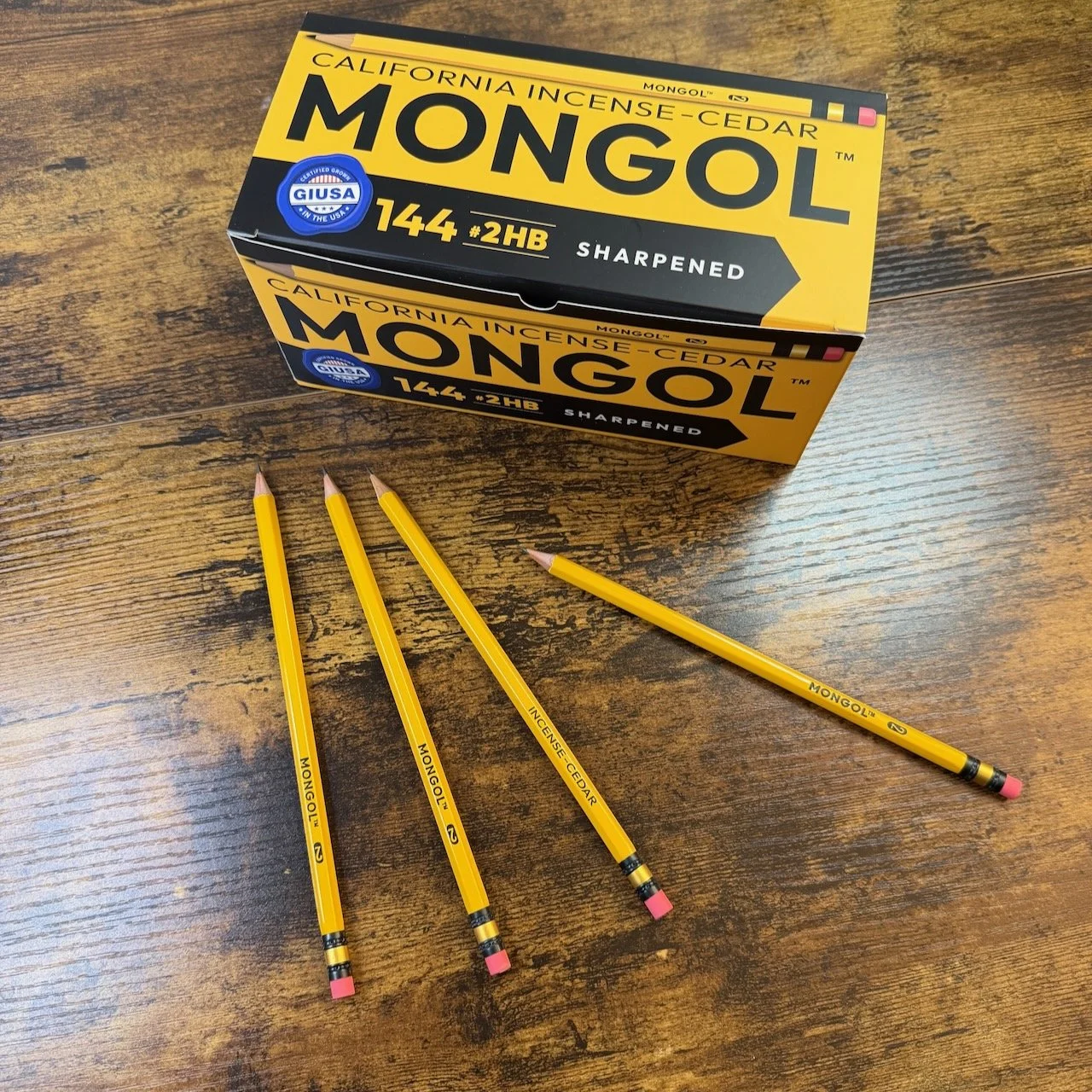
This one surprised me, as the launch came with very little fanfare: the Mongol pencil brand has apparently been reborn. I inadvertently discovered these pencils while browsing one of our distributor websites, and since I collect vintage woodcase pencils, well, I had to pick some up to see if they were worthy of the name.

The new Mongol (bottom) compared against a vintage Mongol 482.

The original Eberhard Faber (later Faber-Castell) Mongol pencil was considered a quality office brand intended for mainstream use, and traditionally sat between inexpensive school-grade pencils and premium options such as the Blackwing. As with most classic pencils, the Mongol line was phased out in the late 1990s-early 2000s amid a wave of corporate consolidations. Basically, everything became a Papermate, and most premium pencil lines disappeared in favor of cheap imports and low-quality economy pencils that caused many people to “write off” wood pencils entirely. You could still find pencils sold under the Mongol brand internationally in countries including Colombia, Venezuela, and the Philippines, but here in the U.S., multiple generations have come and gone without Mongol having any significant presence outside the vintage market.

From bottom: The re-released Mongol, a vintage Faber-Castell Mongol 482, and a Faber-Castell American, which is a school-grade pencil that makes you envy how good even the cheapest pencils were 30 years ago.

Mongol Pencils: Modern vs. Vintage

So how does the modern re-release stack up against the vintage Mongol? Fairly well, actually, especially once you account for the price point and manufacturing shifts that have occurred in the pencil industry over the past 30+ years. The original Mongol pencils were known for their thick bright yellow lacquer, which the modern version faithfully reproduces. I may actually prefer the lacquer on the new pencil to the vintage Faber-Castell Mongol 482, though the thick application adds to the barrel diameter. The imprint on the new pencils, however, is not as clean, and I strongly prefer the legacy branding. I will attribute this one to an effort to keep the price point down and to offer the new Mongol in the same market segment (office use) as the original.

A close-up of the imprint on the new Mongol, which isn’t as crisp as the

But how does it write? Nostalgia aside, it comes down to the writing experience, and this is a good one. Cedar Alliance Ltd (the company that makes Mongol), states that these pencils contain sustainably sourced California Incense Cedar and European graphite while being manufactured in Vietnam. Tombow pencils are also made in Vietnam, and the quality feels similar.

The new Mongol (top) writes an ever-so-slightly darker line.

I prefer darker pencils, and vintage American pencils - including vintage Mongols - often feel a touch light for my preference. The modern Mongol pencil writes a darker line that I prefer even if it sacrifices a bit of point retention. The eraser is excellent, both functionally and visually, retaining the banded black-and-gold ferrule and bright pink color.
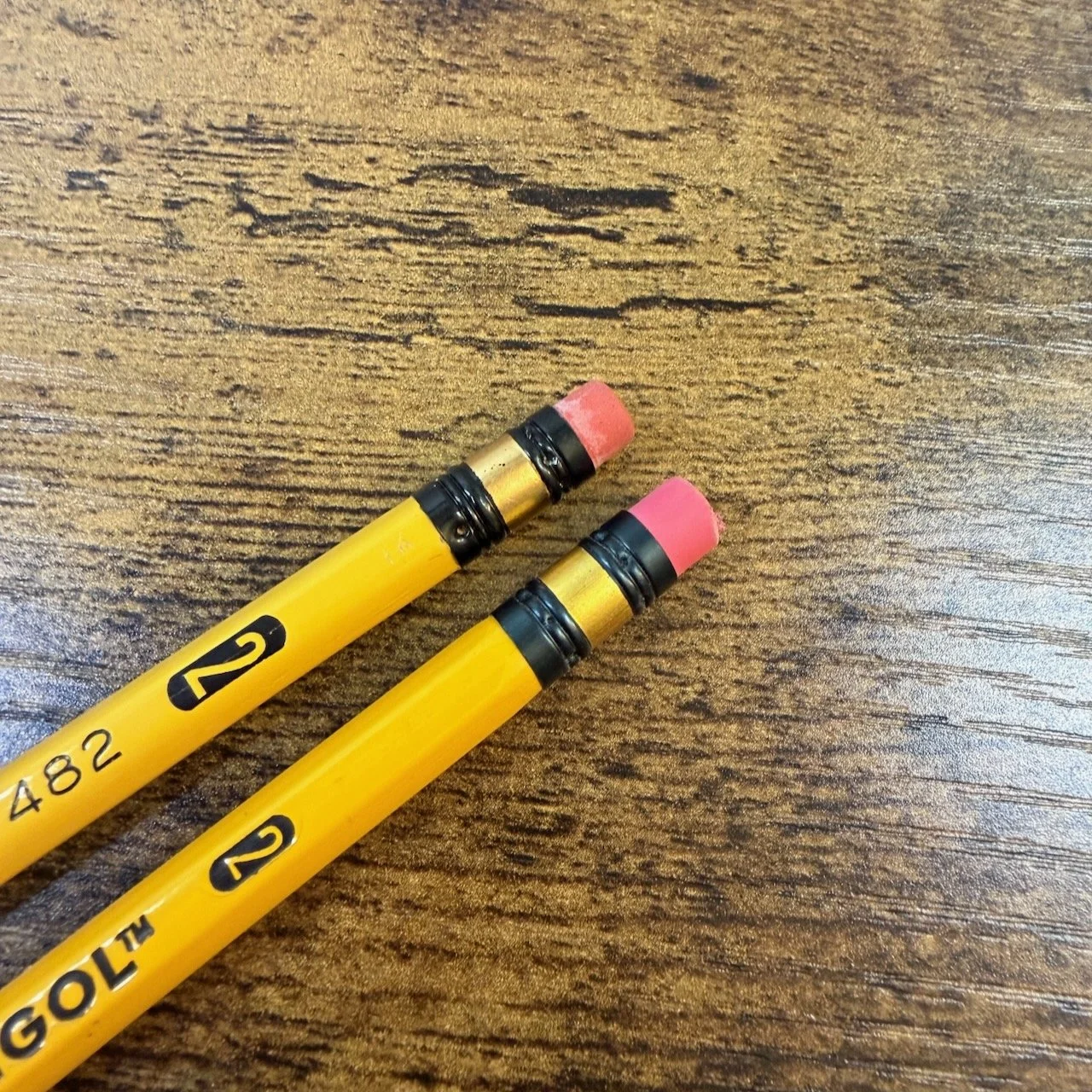
The vintage-style erasers are a classic touch.

So what’s the verdict? I wouldn’t hesitate to recommend these pencils, especially for those looking for a high quality school or office pencil that can be purchased in bulk. For example, 144 Mongols will set you back $36.95. Are the Mongols as “nice” as a Blackwing? No, but they’re a heck of a lot better than what you will currently get from the big box stores or school suppliers for around the same amount of money. You can also buy a pack of 48, and we sell them individually if you would like to try a single pencil.
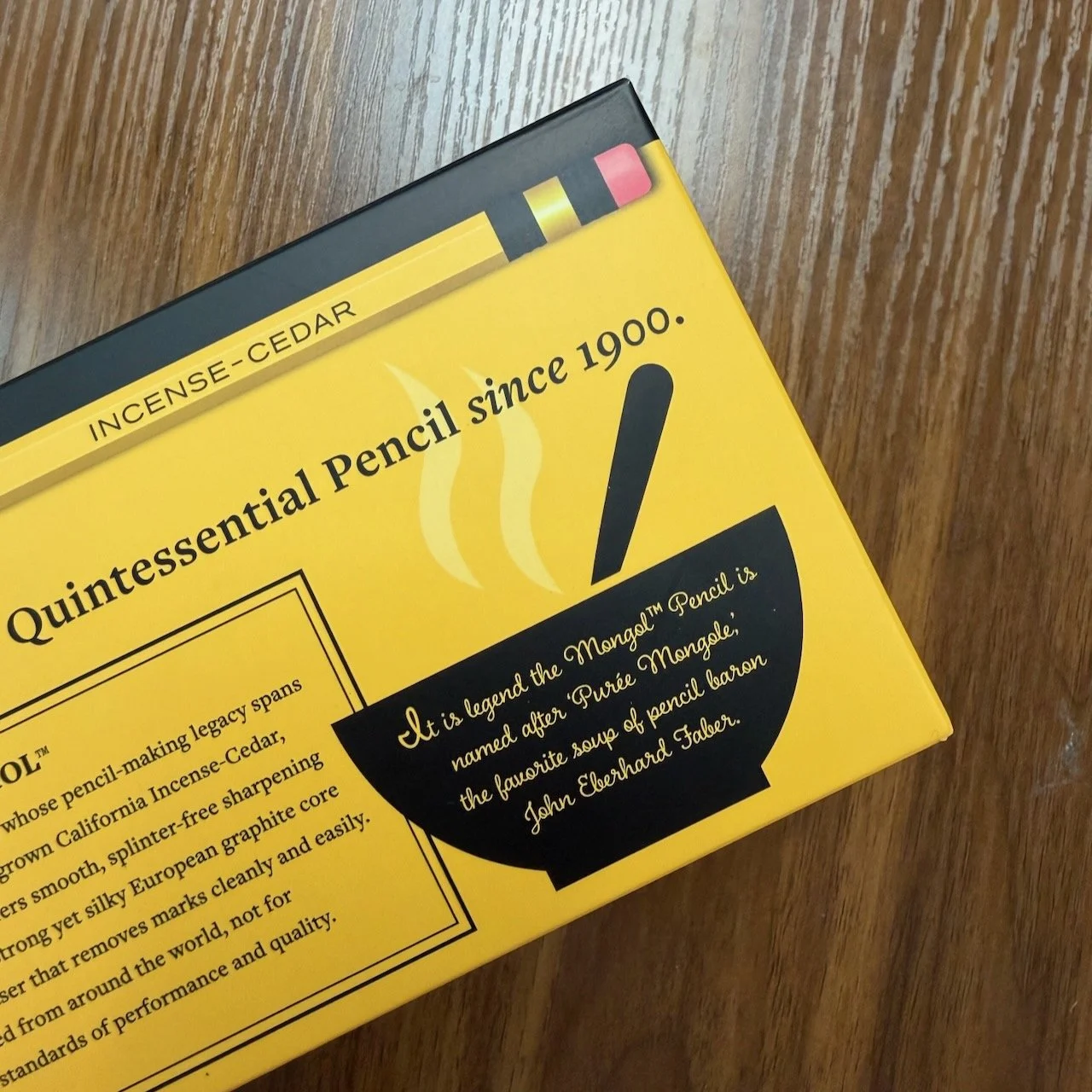
Mongol-pencil-history-label.jpeg

A bit of a history lesson! The name “Mongol” allegedly comes from “Purée Mongole,” a yellow split-pea soup that was a favorite of “pencil baron” John Eberhard Faber.
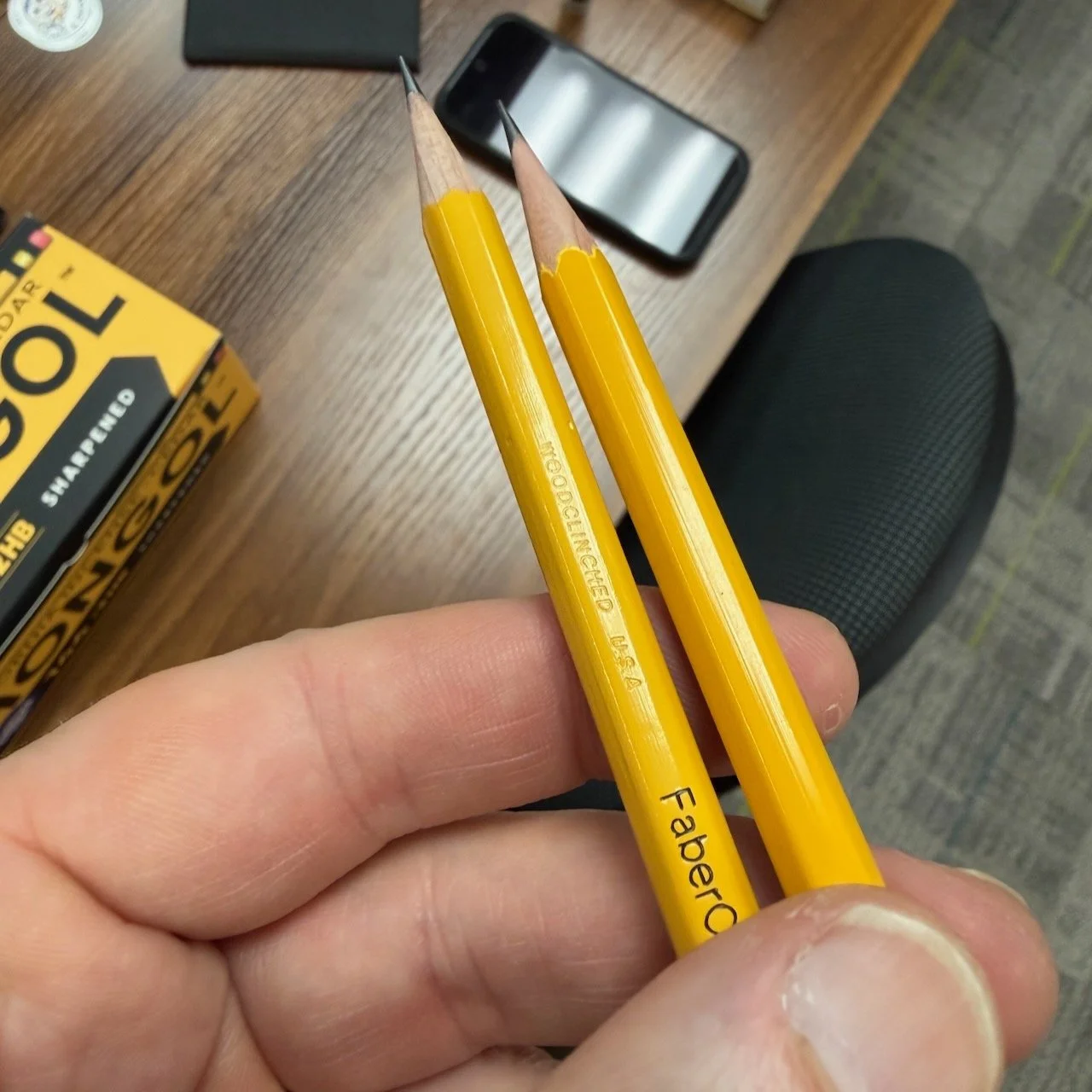
Woodclinched USA Imprint on a vintage Mongol Pencil

Alas, what don’t you get? The “Woodclinched U.S.A.” imprint you used to find on the original.

Bonus: My Current Top 5 Woodcase Pencils for Everyday Writing

While I’m on the subject of wood pencils, I’ve received several submissions requesting that I update my “Top 5 Woodcase Pencils for Everyday Writing.” One note - while I won’t add the new Mongol to this list yet, if the pencil takes off and remains steadily available, I could see this pencil making an appearance due to the value proposition it offers. But not yet. Here are my current Top 5, which you can compare against the old list.

  1. Tombow 2558 (B). Tombow makes exceptionally high quality pencils for the price point, and this particular model is one of the best classic No. 2’s out there. The 2558 writes a smooth dark line in both HB and B grade, the eraser erases cleanly, and the lacquer is impeccably finished. 10/10

  2. Viarco 2001 (HB or B). I’ve always preferred a slightly gritty texture to my graphite - not enough to make the pencil scratchy, but just enough to add tactility to the writing experience. I can’t stand overly waxy pencils. Viarco pencils have the perfect feel, and there’s the added historical charm to writing with a pencil made in one of the last operating European pencil factories.

  3. Camel (HB). Part of this pencil’s allure is the integrated eraser, which sits flush with the barrel, but Camel pencils also use excellent graphite and feature a finish that you would expect from a premium Japanese writing pencil.

  4. Mitsubishi 9850 (HB). This classic Japanese office pencil pairs a red lacquer barrel with a white eraser. Apparently I’m not the only one who loves these things, as they are insanely difficult to keep in stock.

  5. Blackwing Natural (Extra-Firm). Sure, it’s a premium option for everyday writing, but the natural finish on these pencils remains a favorite and the extra-firm graphite ensures that your pencils will last a long time. The Natural has become my go-to pencil from Blackwing’s lineup.

All of these pencils have great imprints, in my opinion. In addition to being quality writing instruments, they’re visually interesting desk objects that retain their respective brands’ heritage.

The Gentleman Stationer is supported by purchases from the T.G.S. Curated Shop and pledges via the T.G.S. Patreon Program. You can also come visit us at our physical stationery store in Nashville, Tennessee.

In Pencils, Pencil Review Tags Mongol Pencils, New Mongol Pencil, Woodcase Pencils, Pencil Review, Top 5

Ask TGS: What's The Best Paper for Pencils?

May 28, 2025

The question above is one that I get regularly. Just as fountain pen enthusiasts are extraordinarily particular about paper, pencil enthusiasts also have their preferences, and people regularly approach me for “pencil paper” recommendations. What’s interesting is that fountain pen and pencil preferences can be diametrically opposed: certain smooth, coated papers that work well with fountain pens can feel too glassy and smeary with graphite; whereas more textured, tactile papers that appeal to pencil enthusiasts might catch on a pen nib and/or be too absorbent for water-based inks.

What Are My personal Pencil Preferences?

This is an “Ask TGS” post, so it goes without saying that my answer here is colored by my own personal preferences, which favor a more tactile writing experience when using pencils. I tend to like pencils with graphite on the scratchier side, and seek out paper with texture somewhat akin to a sketchbook. That’s what I think of as “pencil paper”. Yes, there are people who prefer smoother paper with pencils, in part because it won’t wear the point down as quickly and won’t require sharpening the pencil as frequently. If you value point retention, definitely take this into account. Personally, I enjoy pausing periodically to sharpen the pencil, as it forces me to slow down and periodically reflect. YMMV.

Appointed’s heavy-duty spiral “The Notebook” has become a pencil favorite.

Papers That I Love with Pencil, In No particular order

  1. Blackwing Paper. Predictably, Blackwing Paper was designed with pencils in mind, and I’ve always found that the Slate notebooks and “Illegal Pads” strike a good balance between texture and functionality. They’re textured enough to feel satisfying with pencil, yet not too rough to use with pens. I’ve had very good luck using Blackwing paper with most fountain pens.

  2. Baron Fig Paper. I have a large stock of Baron Fig “Mastermind” Desk Pads that I purchased years ago, so it’s possible the paper has changed as Baron Fig has reconfigured a lot of their product line, but as originally reviewed the Mastermind paper was excellent paper for pencils. Fountain pens can be hit or miss, though I always find the paper adequate for most everyday tasks where I’m using one of these tear-off desk pads. Notsu’s Writing Pads are similar.

  3. Appointed Paper. I discovered Appointed last year when I was shopping in New York City and picked up one of their top-bound spiral to-do pads. I fell in love with this paper for pencil, even if it’s too absorbent to use with fountain pens broader than a fine. Appointed Paper has what I’d consider to be a near-perfect texture for pencils and might be my new standard for graphite.

  4. Midori MD Cotton. One of my favorite “middle ground” workhorse papers for when I want to use fountain pens, pencils, and other inks interchangeably, Midori MD Cotton has subtle texture and exceptional ink-friendliness for a more absorbent cotton paper. If Midori offered this paper with rulings (like they used to), it would easily be my primary writing paper.

  5. Any Sort of Laid or Textured Paper (G. Lalo, Original Crown Mill, Bindewerk). There’s definitely a balance, because overly textured paper can cause lead breakage with longer points and mechanical pencils, but traditional laid or linen-textured paper can be fun to use with pencils. Most of these papers also handle ink well, though some users dislike heavier texture with a fountain pen nib or pen tip, especially finer points or sharper shapes like stubs and architects that can get caught in the ridges.

While I hope you find this helpful, there’s no substitute for your own experimentation. This can be hard to explain to in-store customers or pen show attendees: some people want there to be an undisputed “best paper,” but the most I can offer is starting point. Enjoy the exploration, as that can be the best part of the hobby. The great thing about paper is that it’s expendable. If you keep writing, you’ll eventually use it up and you can try something different!

Come see us in-store this week and try some of this for yourself! We are open from 1pm-6pm Thursday and Friday, and with reduced hours from 9-11am this Saturday (I have a family event to attend.) I will likely have some make-up hours Sunday afternoon.

In Ask TGS Tags Best Paper, Top 5, Pencils
Comment

Iroshizuku Yama-Budo still does it for me after all these years.

Joe's Picks: Five Favorite Inks From Pilot's Iroshizuku Lineup

May 24, 2025

I had someone come into the shop the other day and ask: “All these inks are overwhelming. If you could pick five to show me, what would they be?” That’s a hard question to answer, especially for someone who’s been into fountain pens and inks for well over a decade and have had so many inks rotate through my pens that they all start to blur together! It’s easier for me to point people to one or two preferred brands, based on their experience level and specific needs, and recommend a handful of inks within those lines. Pilot’s Iroshizuku line is one of my go-to overall recommendations for experienced and novice users alike.

I’ve been using Iroshizuku inks for over a decade now, and even after all this time it remains one of my favorite workhorse fountain pen inks, with reliable performance and an interesting range of colors. Generally regarded as a safe, low-maintenance ink that works well in nearly all fountain pens, you could live comfortably in the Iroshizuku line without exploring much else, especially since Pilot has also issued a large number of the inks in cartridge form. See below for the five colors that have carved out a permanent role in my personal collection, which I was somewhat surprised to discover has a pretty good variation across the range, and actually includes some brighter tones as opposed to my preferred muted shades. Wherever possible, I’ve linked to past reviews of each individual ink, which may contain additional photos.

  1. Iroshizuku Tsuki-Yo. The first Iroshizuku Ink I ever purchased remains a go-to workhorse that I usually have loaded into at least one pen. At first glance, it appears like a simple blue-black with hints of teal, but on certain papers you can get a bit of red sheen, and the ink has some depth that I still find myself admiring 10 years later.

  2. Iroshizuku Yama-Budo. Another classic that was my “signature” ink for a couple of years before I went through a dark red phase. Yama-Budo defies characterization. Many people call it a purple, some call it a magenta/dark pink. I’m a fan of of these off-red shades, so however you describe it, it’s really nice to use to mark-up or annotate documents when you don’t necessarily want an eye-searing red.

  3. Iroshizuku Sui-Gyoku. One of the newer Iroshizuku inks, from the second-most-recent batch of releases, Sui-Gyoku rapidly became my favorite teal. Leaning more bright green than blue, it’s easier on the eyes than a pure turquoise and still dark enough for me to use professionally.

  4. Iroshizuku Kon-Peki. The first cult favorite from the Iroshizuku lineup, Kon-Peki topped many “best of” ink lists for years. A bright cerulean blue, it became popular because it offered a safer alternative to certain vivid, heavily pigmented blue inks that caused clogging issues for fountain pen users.

  5. Iroshizuku Syun-Gyo. I was shocked to see Pilot add a red-black to the Iroshizuku line in their most recent refresh. Like Yama-Budo, Syun-Gyo defies characterization, with some people seeking more brown than black, and more purple than red. Either way, I love these muddy, muted shades because I find that they add character to my handwriting.

All Pilot inks show a lot of depth, but Tsuki-yo (second from top) remains a favorite, because it has so much depth.

If you’re interested in exploring the Iroshizuku line for yourself, we carry the full lineup of inks in our shop, in both bottle and cartridge formats, and we also stock a curated selection of Pilot fountain pens. Our brick and mortar store is open this weekend from 1-6pm on Thursday and Friday, and 10am-6pm on Saturday.

In Editorial Tags Editorial, Top 5, Pilot Iroshizuku Ink, Joe's Picks
5 Comments

2024 Year-End Review: My Five Most-Used Pens of 2024

December 18, 2024

Every December, I recap the previous year by discussing favorites, including favorite new product discoveries, most-used pens, favorite product reviews, and more. Last week, I talked about five favorite product discoveries from 2024: new and new-to-me products that I discovered over the past 12 months. Today’s recap offers my five most-used pens from this year. There are some old favorites on this list, which isn’t really surprising since it’s been such a busy year, and when I’m busy I tend to default to my “workhorses”, but there are also a couple of new entries.

  1. Lamy 2000: Fountain Pens and Rollerball. The Lamy 2000 fountain pen continues to form the core of my everyday writing rotation. It’s long been my favorite pen, both because I enjoy the writing experience and because, as an understated design classic, it’s always pleasant to look at. This past year, I added the limited edition “Pine” version of the fountain pen, and I also began using the rollerball once I discovered the Ohto CR-305 .5mm refill - a low-bleed rollerball refill that’s causing me to reconsider rollerballs as an option once again.

  2. Pilot Custom 823. These pens hold so much ink, and they’re so convenient for travel, that I rarely go any period of time without having one inked up. This year I’ve primarily used my Amber medium that has a Mark Bacas blade grind (sort of a Naginata/soft-architect).

  3. Tom’s Studio Lumos Write. The Lumos Pro Duo is cool, with it’s double tip, but since I use my fineliners mostly to write, not draw, the single-tip Lumos Write model is my pen of choice. This model is a bit less expensive than the standard Lumos, and comes with a smaller set of firmer writing tips. I’ve been using either standard black ink or the Tom’s Studio “Midnight” fineliner ink in this pen, with good results.

  4. Montblanc 146 UNICEF Edition. Sure, it’s basically a “boring” standard black Montblanc 146 with platinum trim, but this particular pen sports an excellent “Perspective” grind from Gena Salorino at Custom Nib Studio. It’s their version of the Naginata-style grind, and makes for an excellent everyday writer that I find more practical than an architect.

  5. Tactile Turn “Vice” Short Side-Click. I don’t know why I like this particular pen so much - it’s probably the 1980s Florida connection - but regardless of the reason, it’s been a constant companion since I picked it up this summer. I still feel strongly that the “Short” version of the Tactile Turn Side-Click has the best balance for me personally. The fact that it accepts Parker-style refills makes the Side Click a versatile choice for those who need a durable EDC ballpoint.

The Gentleman Stationer is supported by purchases from the T.G.S. Curated Shop and pledges via the T.G.S. Patreon Program. If you’re interested in talking inks and seeing our swatches and growing selection, come see us in-person! We’re open this week Thursday-Sunday, and otherwise by appointment.

In Editorial, Top 5 Tags Editorial, Top 5, Year-End Review, 2024 Recap

Speaking of greatest hits, I'm on track to finish this classic of its genre this weekend. My Anterique Brass Mini in red has been to the beach and back.

Vacation Recap: Traveling with Stationery, Greatest Hits

September 7, 2024

Since my goal for this long weekend is to enjoy a couple of days off, I’m bringing back the tradition of recap-style posts for vacation weeks. Today, I’ve chosen five of my favorite T.G.S. posts relating to travel stationery, ranging from questions about flying with fountain pens to posts about what I travel with and use when I’m on the road. Enjoy!

  1. Your Questions Answered: Flying with Fountain Pens. Air travel with fountain pens can be tricky, and my preferred way to avoid air-travel inksplosions is to carry a pen that features some sort of shut-off valve to minimize ink leaking out the section. In addition to the pens featured in this particular post, I’d add the bulkfiller-style pens discussed earlier this week.

  2. Updated Travel Kit 2024: Packing Pens, Pencils, and Notebooks for a Road Trip. Over the years I’ve adapted my stationery “travel kit” to reflect different needs and preferences, mainly adding more mechanical pencils and low viscosity ballpoints, which are often simply easier options when working on airplanes and in travel lounges and conference rooms.

  3. Travel Chronicles: Actually Traveling with a Traveler’s Notebook. Lots of people ask me about my preferred setup for a Standard-size Traveler’s Notebook, and since we’re taking a pretty significant international family trip in about 6 weeks (on which I plan to bring a Traveler’s Notebook as my primary journal), it’s a topic I’ve been thinking more about.

  4. 2023 Travelogue: What I Consider When Visiting Pen Stores and Shopping at Smaller Retailers in General. Whenever I land in a new town (or a favorite city I haven’t visited in a while), I try to visit all the local pen shops and pick up any special or exclusive editions you can’t find elsewhere. I do the same with independent bookstores.

  5. An Overlooked Gem? The Traveler’s Company Brass Ballpoint Pen. Whenever I get the chance, I try to push the Traveler’s Company Brass Ballpoint pen, which is one of my preferred vacation pens due to its compact size and the ability to clip it to the front of a book. (Though it may be rivaled by these little Anterique ballpoints, shown above.)

The Gentleman Stationer is supported by purchases from the T.G.S. Curated Shop and pledges from the T.G.S. Patreon Program.

In Editorial, Travel Tags Vacation, Travel, Top 5, Editorial
Comment
Older Posts →
Check Out Our New Online Shop!
Store Hours and Events
Updated 2026 "Best Pens" Guide
No results found
On The Paper Trail: Live In Nashville Event Tickets Now Available!
TGS_25 Roterfaden Restock Notification
Hierarchies of Fountain Pen Friendly Paper

Join Our Patreon!
Subscribe to the TGS E-mail List

Featured Posts

Featured
Mongol-Pencil-Incense-Cedar-New-Release.jpeg
October 3, 2026
Hands-on with the New Mongol Pencil, Plus My Current Top 5 Woodcase Pencils for Everyday Writing
October 3, 2026
Read more →
October 3, 2026
10-Fountain-Pens-Favorite-Inks
August 22, 2026
Three Keeper Inks: Choosing Inks for 10 Fountain Pens
August 22, 2026
Read more →
August 22, 2026
Everyday-Stationery-Bags
July 25, 2026
What's the Best Everyday Stationery Bag? My Own Considerations and 5 Options for Pen Show Season
July 25, 2026
Read more →
July 25, 2026
The Gentleman Stationer RSS

© Digital Divide Media, LLC, 2014-present.

All content is the exclusive property of Digital Divide Media, LLC, d/b/a The Gentleman Stationer, including “The Gentleman Stationer” website and trademark, and should not be reproduced without express written permission.  All rights reserved.

All content containing paid advertising, affiliate links, or sponsored content will be plainly disclosed by a disclaimer when/if featured.

Contact Information

Website Terms and Conditions

Privacy Policy and Cookie Policy

Accessibility Statement

Legacy Account Login

Powered by Squarespace