• Blog
  • Shop
  • Podcast
  • Resources
  • Archive
  • FAQ
  • About
  • Contact
  • Sign In My Account
Menu

The Gentleman Stationer

  • Blog
  • Shop
  • Podcast
  • Resources
  • Archive
  • FAQ
  • About
  • Contact
  • Sign In My Account
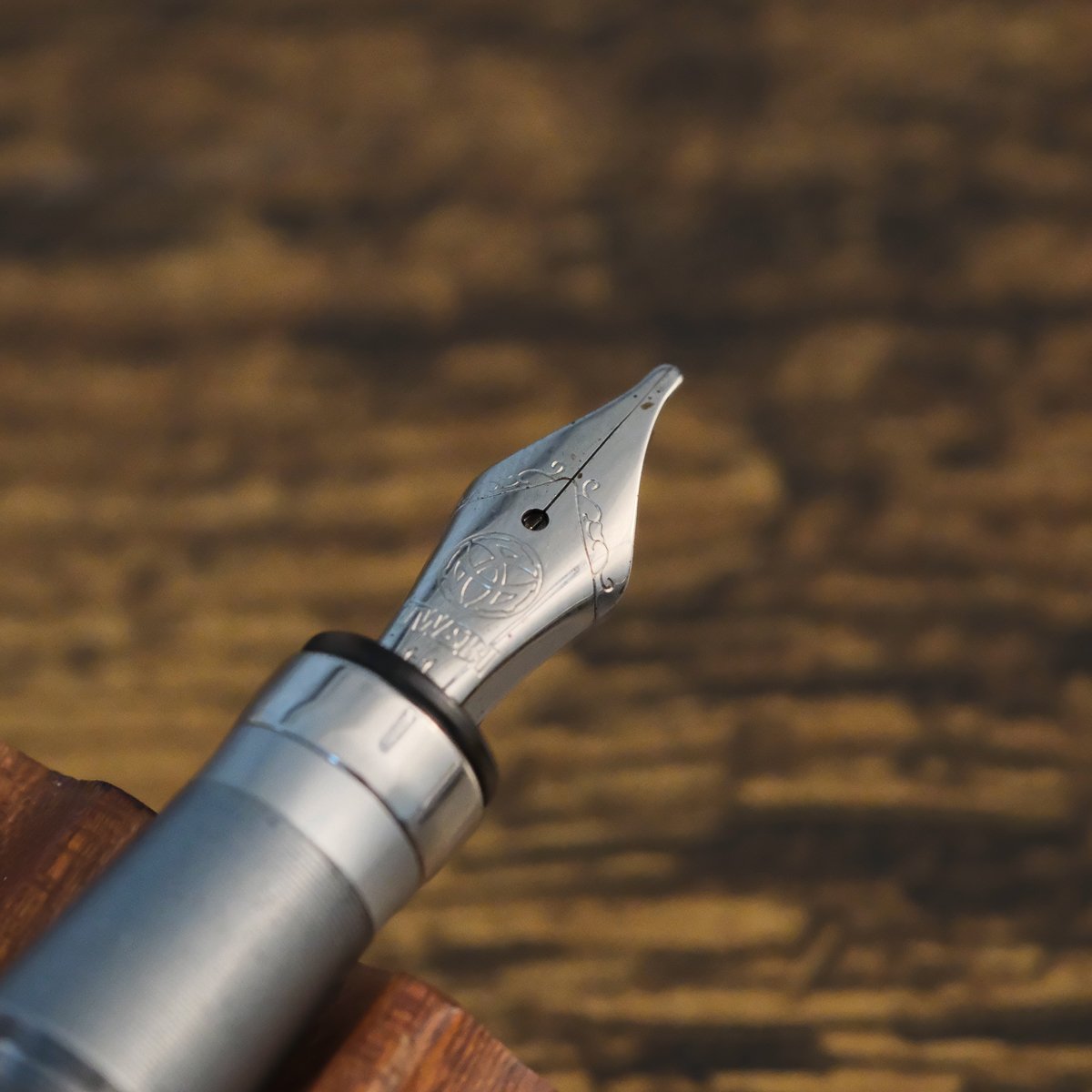
TWSBI Diamond 580 Stub Nib on Diamond 580 ALR Fountain Pen

Favorite Specialty Nibs That Don't Require a Nib Grind or Modification

September 19, 2026

Many people are understandably nervous about having a nib modified by a nib grinder, whether that’s reducing a nib’s size from broad to medium, medium to fine, or changing the shape of the tipping entirely to something like a stub, architect, or kodachi. Nib modifications are irreversible. Once you’ve ground a nib into a new shape you can’t return it to its prior form without cost-prohibitive retipping, so it’s definitely wise to carefully consider any modification before you alter a favorite pen.
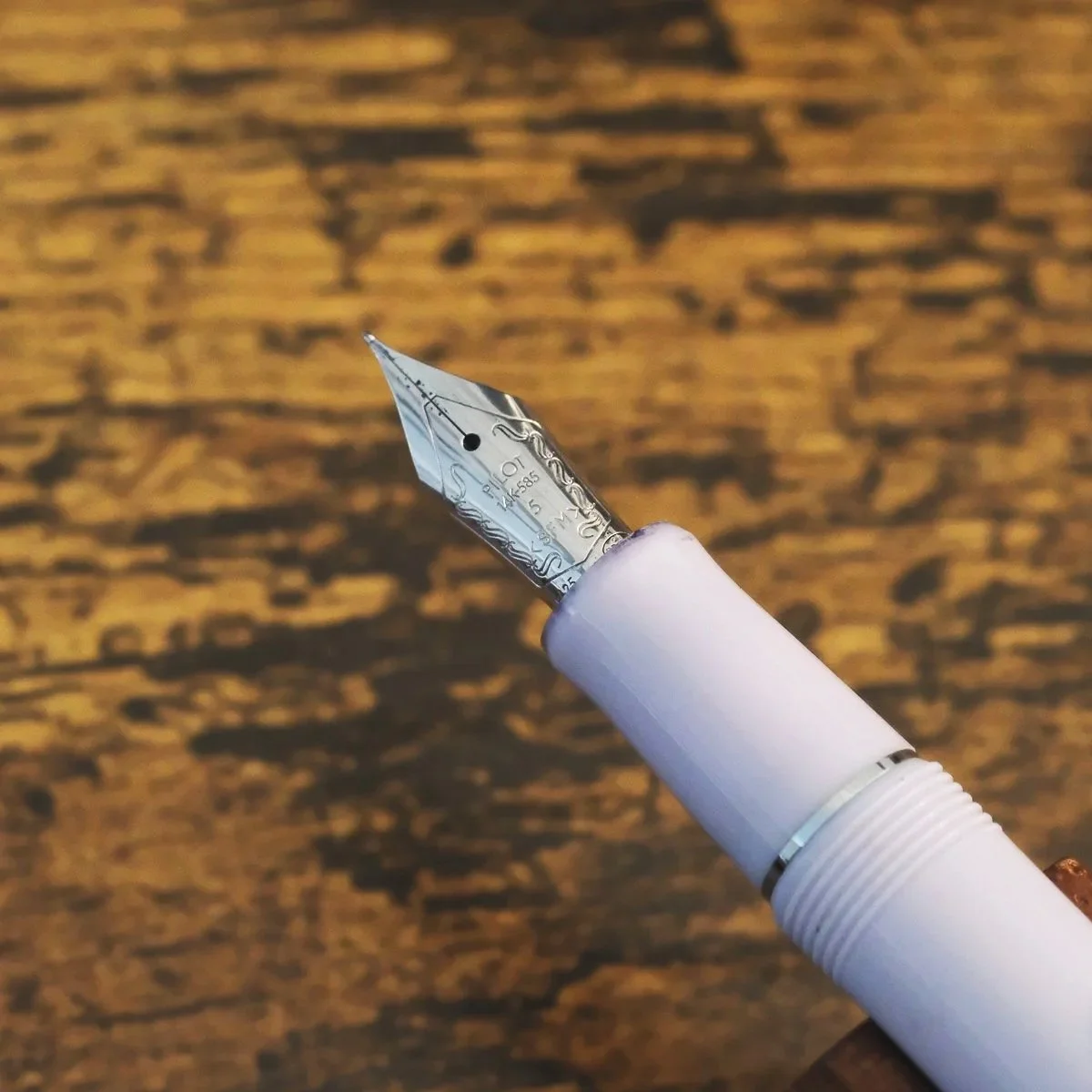
Pilot Lavender Fog Fountain Pen with SFM Nib

Look for the “SF”, “SM”, or “SFM” designation on Pilot nibs to find the relatively rare “soft” designation.

One way to test the suitability of a potential nib modification is to purchase a pen with a stock specialty nib. For example, if you’re considering having a nib ground to a stub or an architect, consider picking up a stock version and testing the grind/style of nib before modifying a pen in your collection. While stock nibs won’t be tailored to your personal handwriting - the main benefit of having a nib ground in person - they do give you an idea of how a style of nib writes and the opportunity for a longer “road test”. Pen shows and pen clubs can be helpful if people allow you to write a few lines, but I often need a week or more of continuous writing before I figure out whether a grind or nib style will work for me.

TOp “Stock” Specialty Nib Recommendations

  1. TWSBI 1.1mm Stub. Those who have never written with a stub or italic nib should try TWSBI’s 1.1mm stub nib. Available in nearly all their pen models, this stainless steel stub is smooth and delivers good ink flow. It’s an excellent way to explore stub/italic line variation at a lower cost. We’ve previously done comprehensive posts devoted entirely to stock stub nibs, which we had to break into Part I and Part II.

  2. Tom’s Studio Architect Nib. Stock architect nibs are difficult to do well because the smoothness of this grind depends heavily on your writing angle. The Tom’s Studio Architect starts as a double broad stainless steel nib, so it has a bit more tipping and is ground at a more forgiving angle than many architects. You can purchase this nib as a stand-alone add on to a Tom’s Studio pen, or you can find it pre-installed on certain pens in their Studio Pocket line.

  3. Pilot Kakuno EF or Pilot PO Nib. A lot of people think they want a needle-tip or “ultra extra-fine” fountain pen - until they actually write with one. Those of us who learned to write with ballpoint technology tend to apply far too much pressure, which can absolutely make a very fine fountain pen feel “scratchy”. (You are essentially pressing a needle into the surface of the page and trying to drag it around.) Before customizing one of your own pens, try an inexpensive steel-nib EF Pilot Kakuno, or a Pilot Custom 912 with a PO nib if you prefer gold. Both of these pens offer a sense of how most needlepoints “feel” on the page, including whether you need to adjust your own writing pressure in order for these nibs to be usable.

  4. Pilot “Soft” Series or “FA” Nibs. Considering having one of your gold nibs modified for flex or semi-flex? Many people don’t consider (1) how much ink these nibs put on the page, making them impractical for writing on lower-quality paper; and (2) how you need to slow your writing down when writing with a flex nib so that the ink flow can keep up. While the Pilot “Soft” nibs and the FA nibs are not necessarily true vintage-style flex, they will give you a sense of whether this type of wetter-writing pen is for you.

Note the wide downstrokes and narrower cross strokes on this Stub.

Nib grinds and modifications can be fun, and even addictive. That said, as I mentioned above it’s usually irreversible in the sense that if you don’t like the result, you’re left replacing either the nib or the pen. Stock nibs can be a less expensive (or at least less permanent) way to explore, and we regularly recommend these options and more for those looking to branch out from your standard round nibs.

Looking to learn more? Come see us in person at our Nashville shop or at a pen show! We will be at the Dallas Pen Show next week (September 25-27), and from October 16-18, we will be co-hosting the On The Paper Trail Live in Nashville weekend event. Both events have nib grinder opportunities, so be sure to buy your tickets in advance.

In Editorial, Top 5 Tags Nib Modifications, Nib Grinding, Pen Shows, Stock Stubs

How to Prepare to Get Fountain Pen Nibs Tuned and/or Ground

January 17, 2026

I felt that this topic is particularly timely, given that (1) many readers might be attending the Philadelphia Pen Show this weekend, and (2) others might be attending our own in-store event with Matthew Chen and Vanness Pens next weekend (January 23-24 during normal store hours). The prospect of getting a nib tuned or ground can be daunting for many reasons - and you do have to be careful because making changes to a nib can be irreversible - but it doesn’t have to be scary. Here are a few things to think about before committing to a nib modification:

You Don’t Have to Grind or Modify Any Pen If You’re Happy with How It Writes.

There can be a FOMO aspect to nibwork, where it’s easy to fall into the trap of thinking that you need certain nib grinds in your collection, or that you’re not a serious fountain pen user unless all of your pens have been custom ground. That’s not true - the majority of my own pens are standard medium nibs and a medium is my default nib size for everyday writing. If you have a favorite pen and it writes perfectly for you, leave it alone unless you are absolutely certain what you want to do with it because most nib modifications are irreversible (at least without expensive re-tipping).

Please see Matthew’s website for his current offerings, as this was a pen show setup and it is offered here only to provide a general idea of the different types of grinds available and a ballpark range of what they cost.

It’s Not “Illogical” to Pay to Tune a Favorite Pen If It MAKes Your Pen Write Perfectly for You, Even if The Pen Itself Is Inexpensive

I can’t tell you how many people have come to me and said that they wish “X” pen wrote better because they absolutely love it and/or it has sentimental value, but they don’t want to pay to have it tuned because it only cost $30/$50/$75. I’ve paid to grind or tune many inexpensive pens, simply because I really liked the pen and wanted it to write perfectly for me. If a tune or grind means that I’ll use the pen for years and it becomes a regular part of the rotation, then the $25-30 charge means very little in the long run.

In response to the inevitable comments that “a pen should write perfectly out of the box and there should be no need for nib tuning”: Just because a pen needs tuning does not mean that it’s a “bad” pen. Sure, some pens have bad tipping or are defective, and if that is the case you should contact your authorized retailer and send the pen back and get a replacement. That said, writing style is a major factor in how a pen performs. People hold pens at different angles and apply different amounts of pressure, meaning that a nib can feel perfectly smooth for one person but scratchy or toothy for another. People also have different ink flow preferences. For example, some people prefer drier nibs, and others prefer a wetter line. Tuning can better align the pen with your handwriting style.

Start Simple - Don’t Pay for Expensive, Complex Grinds That You Have Never Tried Before You Have Enough Experience with Specialty Nibs

Nib customization can be expensive, with architects and kodachi grinds running upwards of $60-80. They are complicated, difficult to do well, and take time. They’re also not for everybody because they offer a completely different sort of writing experience than what most people are used to here in the United States. If you’ve only ever written with a standard round nib, try to test out different grinds, including less complex stubs and italics that may not be super fancy or trendy but may give you the line variation you are looking for. Most nib grinders have a “tester set” that they bring to shows and clinics to allow you to write with and test the different nib styles before committing.

Matthew brings a set of tester pens to all of his shows/workshops.

If You Are Testing Out Different Grinds, Consider Purchasing inexpensive tester Pens (or Nib Units) Specifically for That Purpose Rather than Modifying Favorite Pens

Early on in my “career” as a stationery enthusiast, and later as a pen reviewer, I took advantage of the interchangeability of TWSBI 580, JoWo, and even Pilot Vanishing Point nib units to test different grinds and styles. The ability to swap nib units in and out of a pen significantly reduces any “risk” inherent in grinding the nib, since spare nib units typically cost less than a full pen, and if you don’t like the result, you can change back to a standard nib or something that you like better. Best of all, if you find a style of pen that you like with interchangeable nib units, you eventually will collect a range of different nibs to use, assuming you like the variety! TWSBI ECOs also make excellent pens for testing nib grinds, given the relatively inexpensive price point and the fact that the broad nibs have a decent amount of tipping to work with.

Matthew hard at work.

Choose an Experienced Nib Grinder, Especially for Favorite Pens

Due to the growing popularity of fountain pens, an increasing number of nib grinders are showing up at pen shows and offering their services over the internet. Please do your research before sending a prized pen off for a nib grind. There are many competent nib grinders out there, but especially early on, I ruined a few pens by sending them to people who didn’t know what they were doing. (I’m not going to share any names - none of them are still working.) Trusted technicians like Matthew Chen and Mark Bacas have years of experience themselves, and have trained under people with even longer (decades-long) track records.

You may notice an overarching theme here, and it comes from personal experience: proceed with caution if you have a pen that’s a personal favorite or that has sentimental value, unless you are very sure that you want to modify the pen. Of course, if the pen needs tuning or a repair because it’s been dropped or isn’t working properly, that’s a different matter entirely, but don’t ask someone to grind your favorite fountain pen from a medium to a Kodachi before you know whether you like that grind.

For Further Reading

I’ve written a lot on nib customization over the years, including an introduction to nib customization and many different posts reviewing specific grinds from different technicians. You can also watch this video from the 2025 Arkansas Pen Show where I filmed Matthew grinding a kodachi nib, which can give you an idea of what the process looks like.

Our upcoming nib event with Matthew Chen and Vanness Pens will take place on Friday, January 23 and Saturday, January 24 during normal store hours. While Matthew will take walk-ins and is normally very good about working in as many people as possible, if you would like to guarantee a specific time slot we offer the option of a reservation. Limit one reservation per person.

In Events, TGS Curated Shop Tags Nib Grinding, Special Event, Matthew Chen, Vanness Pens
1 Comment
Matthew Chen Grinds a Kodachi Nib: Arkansas Pen Show Video

What's It Like to Get a Nib Modified at a Pen Show? Follow Along!

April 12, 2025

So this year at the Arkansas Pen Show, I decided to do something a little different, and filmed a video of Matthew Chen of Matthew’s Nib Works grinding a broad Pilot nib into a Kodachi (his take on the Naginata-Togi style grind that has become so popular lately). In this video, I show Matthew grinding the nib, and I also filmed the post-grind testing process and talk a bit about how the Kodachi is shaped and how the nib writes.

The Kodachi grind on my Lamy 2000 Stainless Steel.

For those interested in reading more about Naginata/Kodachi grinds, you can check out my review of Gena Salorino’s (Custom Nib Studio) “Perspective” grind, which has similar features. My prior video breaking down my Arkansas Pen Show “haul” also had a couple of Kodachi grinds featured - both from Matthew - though they are not the exact pens featured in today’s release. I hope you enjoy, and I have at least one more video of pen show content on the way!

If you enjoy our content, consider supporting us by purchasing directly through the T.G.S. Curated Shop, or by pledging via Patreon.

In Pen Shows Tags 2025 Arkansas Pen Show, Kodachi, Naginata, Nib Grinding
Comment

Ask TGS: Back to Basics on Filling Systems, and Nib Size Variability

March 8, 2025

So we’re back with another Q&A session, this time focusing on two particularly “urgent” questions. Here, I would say that they’re “urgent” in the sense that I’m seeing these same questions (or some slight variation on them) come up repeatedly, which to me indicates that manufacturers, retailers, and other pen industry stakeholders aren’t doing a good enough job of educating newcomers to the fountain pen space. To that end, I’m going to keep publishing these posts and consolidating/organizing them in the “Ask TGS” space for future reference.

Question 1: Why Does My TWSBI Vac700 Or Nahvalur Original Plus or Pilot Custom 823 Only Write for a Half a Page and Then “Dry Up”?

I’ve received this question from three different people in the past month, all of whom purchased one of these vacuum-filler fountain pens without realizing how the vacuum-filling system worked. All of these pens feature a “shut off valve”, which is basically a stopper that seals the ink in the barrel, cutting it off from the nib and feed, when the blind cap is screwed all the way down. On the one hand, this is great for travel, because it means that you can typically bring these pens on an airplane without having to worry about ink leaking into the cap due to changes in temperature or air pressure. On the other hand, in order to write for more than a half-page or so, you will need to open the valve by unscrewing the blind cap one or two turns to allow the ink to flow consistently. It’s a feature of this filling system, not a design flaw, and is quite likely the best way to travel with a fountain pen if your goal is to absolutely minimize the possibility of leakage. See the photo below for an illustration of what I’m talking about.

Here, I’ve opened the blind cap on my Pilot Custom 823 as I would for a longer writing session.

Question 2: My Aurora 14K Fine Nib Writes Wider Than The JoWo Stainless Steel Medium on My diplomat. Is The aurora Nib Defective?

I’ll start by answering this question as directly as I can: No, not necessarily. However, this response needs a lot of context.

Those new to fountain pens often don’t realize that nib sizes are not uniform across brands, and many factors can determine how wide a line any specific nib will leave on the page. For example, a fine nib from a Japanese brand will generally write a much narrower line than a fine nib made by a German company like JoWo or Bock. While regional variations in average handwriting size and general preferences for finer lines in certain countries explains some of the variation between manufacturers, it’s not the entire story, and there are several things to keep in mind when setting expectations:

  • As a general matter, there is little uniformity in the fountain pen world. Fountain pens are inherently imprecise instruments. While ballpoints, gel pens, and rollerballs have less variability with their well-known .5mm, .7mm, and 1.0mm tip sizes, there is no standard for what constitutes an “extra-fine,” “fine,” “medium,” or “broad” fountain pen nib. For those brands that make their nibs in-house with a lot of hand-finishing (like the Aurora referenced above), there may even be variability between individual nibs that are technically the same size.

  • Gold nibs generally write a wetter, wider line than steel nibs of an equivalent size. While not always the case, this is a reasonable expectation. Gold nibs are typically “softer” than steel nibs, meaning the tines have more give and they will accordingly release more ink on the page. On average, the gold medium nibs in my collection write a wider line than their steel counterparts.

  • A fountain pen with an ebonite (hard rubber) feed will generally have heavier ink flow, and hence, write a wider line, than a pen with a plastic feed. This is why makers often pair flex nibs with an ebonite feed, because the ebonite feed ensures that the ink flow keeps up with the nib. Softer gold nibs paired with ebonite feeds can be extremely wet writers, to the point where I personally default to the “extra-fine” nibs in certain brands like Scribo.

  • Piston Fillers, Vacuum Fillers, and Eyedroppers generally write a wetter line than cartridge-converter pens. Again, this is a generalization, but I’ve always found that pens with a larger volume of ink in direct contact with the back of the feed are by default wetter writers, which can affect line width.

  • Your choice of ink and/or paper will affect how a nib performs. Certain inks are wetter than others, and can spread more on the paper. If you have a pen that you feel consistently writes too wide a line, you can try to switch the ink up to something drier, like an iron gall ink and many blue-blacks. Relatedly, non-coated papers that are more absorbent will show a wider line because the ink has a tendency to spread as it soaks into the paper fibers.

To illustrate how these factors combine to affect how a specific pen behaves, consider the question about the Aurora pen above. While a 14k gold Aurora fine nib is on the stiffer side for a gold nib, paired with an ebonite feed in a piston filler, it would not surprise me to have the pen write a similar line to a stainless steel medium JoWo nib (and maybe even wider with a particularly wet ink). To illustrate, here’s a writing sample from my own 14k Aurora Sigaro Blu compared against a writing sample from a stainless steel Kaweco Sport.

There’s not much difference here. The particular Kaweco nib I chose was the wettest one that I could find in my collection, and even then it’s only slightly wider than what I would consider to be a moderately dry Aurora 88 fine nib, which is a 14k nib on a piston filler with an ebonite feed.

So what’s an aspiring fountain pen user to do here? Experiment. That’s part of the fun with fountain pens, and to the extent you can, get to a pen club/pen store/pen show and try as many different pens as possible to get a feel for how different nibs write. While comparing writing samples online can be helpful, and give you a general “ballpark” idea of how a nib will behave, it is at best an approximation because that writing sample is limited to a single combination of pen, ink, and paper that was used to write the sample. Over time, most fountain pen enthusiasts develop preferences for certain brands based on experience and how certain nibs work with our handwriting. Many of us take our pens to a nib grinder to have them tweak the nibs even further to modify ink flow and to shape tipping in order to get the line variation that we want. That’s the great thing about fountain pens - they are infinitely customizable, and you can tweak many different variables to get exactly the writing experience you desire.

We’re open this weekend in-store! Come see us from 9-6pm on Saturday and 1-5pm on Sunday. We have plenty of pens inked up for you to test, so you can see exactly what I’m talking about above.

In Ask TGS Tags Ask TGS, Nib Grinding, Nibs
2 Comments

Exploring Custom Nibs: Custom Nib Studio "Perspective" Grind

June 11, 2022

When I was choosing pens to take on this latest trip, I leaned heavily towards loading up on specialty nib grinds that are an absolute joy to write with, because I really want to get some fun writing done. Whether that be journaling, a bit of “work” on the blog as opposed to the store, or simply playing around with pens, inks, and nibs, I feel like I haven’t had the chance to truly step away from the grind in a while. With that in mind, it’s a complete no-brainer that one of the pens I’d choose to take with me is my Pelikan M800 featuring the “Perspective” nib grind from Gena Salorino at Custom Nib Studio. Put simply, this nib is a joy to write with, whatever your specific use case.

This grind is a bit difficult to describe. Gena’s Perspective Nib combines the vertical/horizontal line variation of an architect with the variable line-width of a Naginata as you raise or lower the writing angle. It even writes an incredibly smooth XXF point on the reverse. The result might be the most versatile nib I’ve used. The standard writing angle can best be described as a forgiving medium architect, excellent for everyday writing because it omits sharp edges while still offering character and line variation. What sets this nib apart, however, is the fact that it can serve as an “all-in-one” workhorse. For example, I typically enjoy writing with a medium nib, but also need to be able to alternately write larger and smaller to highlight/underline and annotate, respectively. The Perspective lets you do it all with one pen.

One nib, four different writing options. The ink is Laban Poseidon Green.

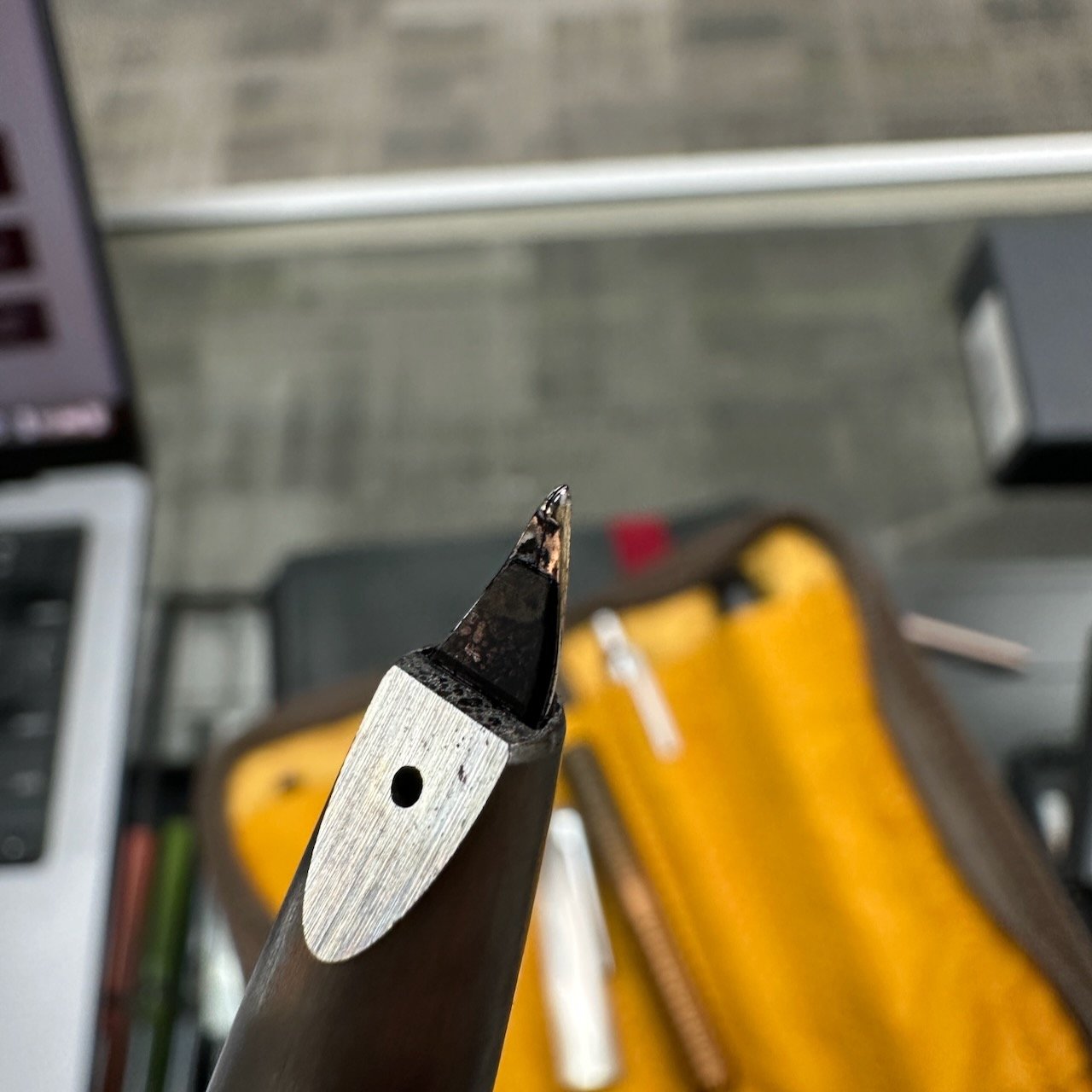
From underneath, the Perspective grind appears almost wedge-shaped. You can see the tipping get wider, allowing you to write a wider line as you lower the angle.

I often talk about nib grinds as a way to salvage pens that you “like” but don’t “love”. Here, I asked Gena to modify the medium nib on my Pelikan M800 Stone Garden - a true workhorse pen that wrote too broad and wet a line for the type of writing I was doing. It bled through most of the paper used in my office (since we’ve recently cut costs even more and apparently gone even cheaper.) Paired with this grind, the M800 has arguably moved into my Top 5 Personal Pens, and I plan to send at least three more pens to Gena for the “Perspective” treatment.

Takeaways and Where to Buy

While you should absolutely take this glowing review with a grain of salt, since opinions on nib grinds reflect the personal preferences and use cases of the writer, the Perspective Nib from Custom Nib Studio is currently my favorite specialty nib grind. (I will say that everyone who has tried this nib - lefties included - has enjoyed it as well.) Fans of architect and Naginata-style nibs will certainly want to give this one a try.

If I’m working, and want to emphasize something that I wrote, it’s nice to be able to lower the angle for a bold underline.

The Perspective Grind costs $55. You can read more about this and other grinds Gena offers on the Custom Nib Studio website, or you can visit them at a pen show, where they’re regular attendees, though you’ll either want to take advantage of early sign-up prior to arrival at the show, or get there very early on show days for the best chance of getting a table slot.

This review is part of a larger review series on custom nib grinds. You can follow along here. I purchased the nib grind featured in this review with my own funds, for my own use. I was not compensated for this review, and all opinions expressed are my own. The Gentleman Stationer is supported entirely by purchases from the T.G.S. Curated Shop and pledges via the T.G.S. Patreon Program.

In Pens Tags Nib Grinding, Custom Nib Studio, Custom Nibs
1 Comment
Older Posts →
Check Out Our New Online Shop!
Store Hours and Events
Updated 2026 "Best Pens" Guide
No results found
On The Paper Trail: Live In Nashville Event Tickets Now Available!
TGS_25 Roterfaden Restock Notification
Hierarchies of Fountain Pen Friendly Paper

Join Our Patreon!
Subscribe to the TGS E-mail List

Featured Posts

Featured
Mongol-Pencil-Incense-Cedar-New-Release.jpeg
October 3, 2026
Hands-on with the New Mongol Pencil, Plus My Current Top 5 Woodcase Pencils for Everyday Writing
October 3, 2026
Read more →
October 3, 2026
10-Fountain-Pens-Favorite-Inks
August 22, 2026
Three Keeper Inks: Choosing Inks for 10 Fountain Pens
August 22, 2026
Read more →
August 22, 2026
Everyday-Stationery-Bags
July 25, 2026
What's the Best Everyday Stationery Bag? My Own Considerations and 5 Options for Pen Show Season
July 25, 2026
Read more →
July 25, 2026
The Gentleman Stationer RSS

© Digital Divide Media, LLC, 2014-present.

All content is the exclusive property of Digital Divide Media, LLC, d/b/a The Gentleman Stationer, including “The Gentleman Stationer” website and trademark, and should not be reproduced without express written permission.  All rights reserved.

All content containing paid advertising, affiliate links, or sponsored content will be plainly disclosed by a disclaimer when/if featured.

Contact Information

Website Terms and Conditions

Privacy Policy and Cookie Policy

Accessibility Statement

Legacy Account Login

Powered by Squarespace