• Blog
  • Shop
  • Podcast
  • Resources
  • Archive
  • FAQ
  • About
  • Contact
  • Sign In My Account
Menu

The Gentleman Stationer

  • Blog
  • Shop
  • Podcast
  • Resources
  • Archive
  • FAQ
  • About
  • Contact
  • Sign In My Account
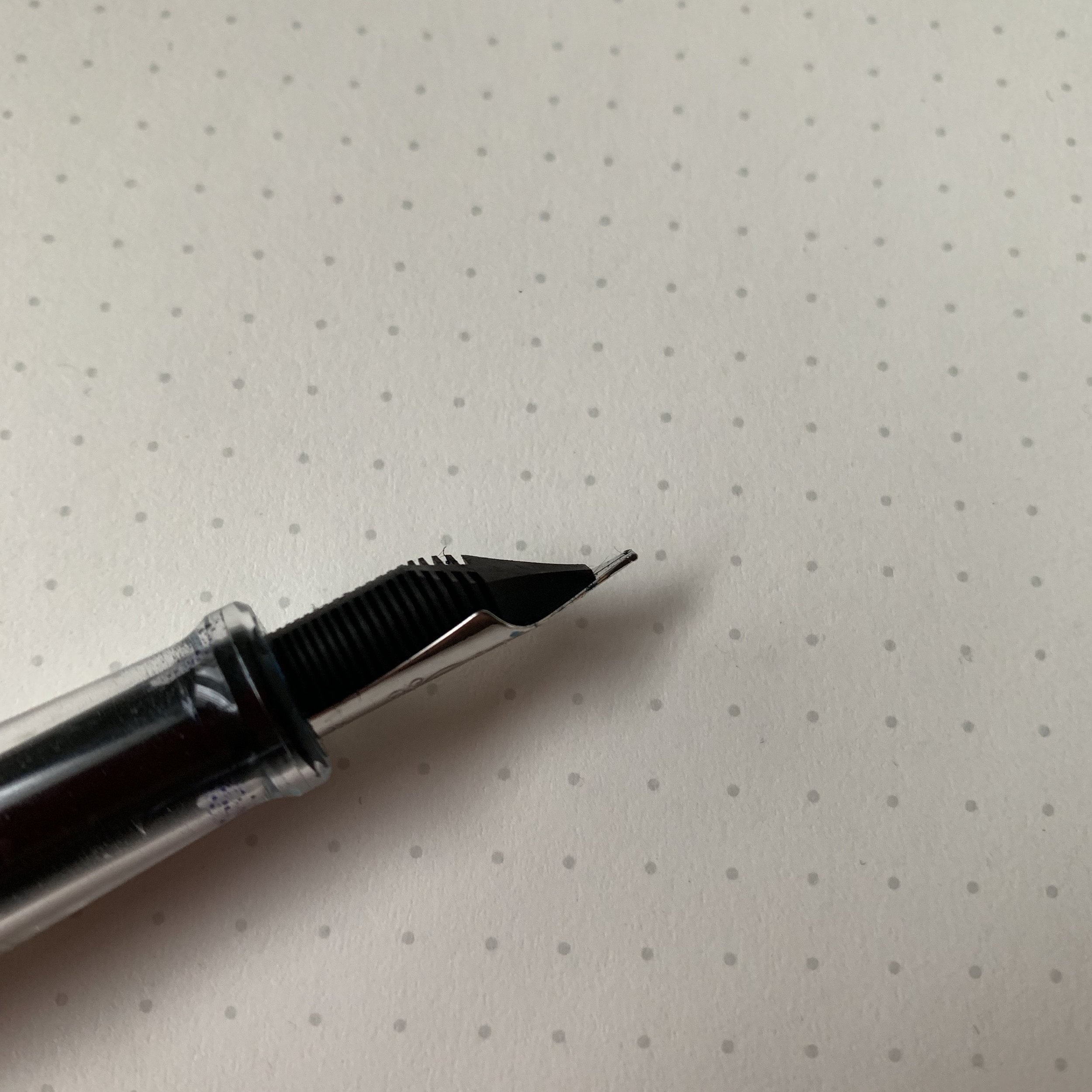
TWSBI Diamond 580 Stub Nib on Diamond 580 ALR Fountain Pen

Favorite Specialty Nibs That Don't Require a Nib Grind or Modification

September 19, 2026

Many people are understandably nervous about having a nib modified by a nib grinder, whether that’s reducing a nib’s size from broad to medium, medium to fine, or changing the shape of the tipping entirely to something like a stub, architect, or kodachi. Nib modifications are irreversible. Once you’ve ground a nib into a new shape you can’t return it to its prior form without cost-prohibitive retipping, so it’s definitely wise to carefully consider any modification before you alter a favorite pen.
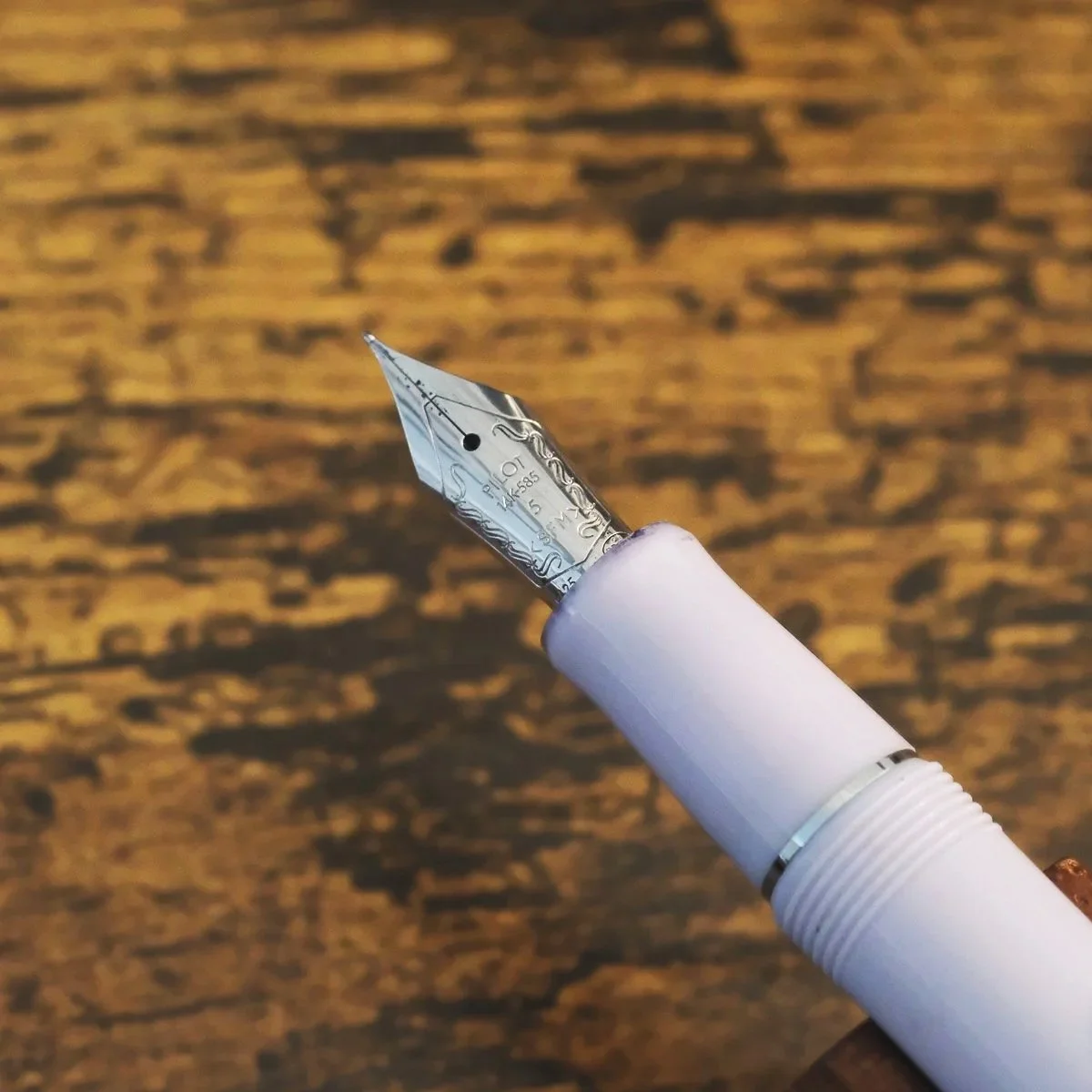
Pilot Lavender Fog Fountain Pen with SFM Nib

Look for the “SF”, “SM”, or “SFM” designation on Pilot nibs to find the relatively rare “soft” designation.

One way to test the suitability of a potential nib modification is to purchase a pen with a stock specialty nib. For example, if you’re considering having a nib ground to a stub or an architect, consider picking up a stock version and testing the grind/style of nib before modifying a pen in your collection. While stock nibs won’t be tailored to your personal handwriting - the main benefit of having a nib ground in person - they do give you an idea of how a style of nib writes and the opportunity for a longer “road test”. Pen shows and pen clubs can be helpful if people allow you to write a few lines, but I often need a week or more of continuous writing before I figure out whether a grind or nib style will work for me.

TOp “Stock” Specialty Nib Recommendations

  1. TWSBI 1.1mm Stub. Those who have never written with a stub or italic nib should try TWSBI’s 1.1mm stub nib. Available in nearly all their pen models, this stainless steel stub is smooth and delivers good ink flow. It’s an excellent way to explore stub/italic line variation at a lower cost. We’ve previously done comprehensive posts devoted entirely to stock stub nibs, which we had to break into Part I and Part II.

  2. Tom’s Studio Architect Nib. Stock architect nibs are difficult to do well because the smoothness of this grind depends heavily on your writing angle. The Tom’s Studio Architect starts as a double broad stainless steel nib, so it has a bit more tipping and is ground at a more forgiving angle than many architects. You can purchase this nib as a stand-alone add on to a Tom’s Studio pen, or you can find it pre-installed on certain pens in their Studio Pocket line.

  3. Pilot Kakuno EF or Pilot PO Nib. A lot of people think they want a needle-tip or “ultra extra-fine” fountain pen - until they actually write with one. Those of us who learned to write with ballpoint technology tend to apply far too much pressure, which can absolutely make a very fine fountain pen feel “scratchy”. (You are essentially pressing a needle into the surface of the page and trying to drag it around.) Before customizing one of your own pens, try an inexpensive steel-nib EF Pilot Kakuno, or a Pilot Custom 912 with a PO nib if you prefer gold. Both of these pens offer a sense of how most needlepoints “feel” on the page, including whether you need to adjust your own writing pressure in order for these nibs to be usable.

  4. Pilot “Soft” Series or “FA” Nibs. Considering having one of your gold nibs modified for flex or semi-flex? Many people don’t consider (1) how much ink these nibs put on the page, making them impractical for writing on lower-quality paper; and (2) how you need to slow your writing down when writing with a flex nib so that the ink flow can keep up. While the Pilot “Soft” nibs and the FA nibs are not necessarily true vintage-style flex, they will give you a sense of whether this type of wetter-writing pen is for you.

Note the wide downstrokes and narrower cross strokes on this Stub.

Nib grinds and modifications can be fun, and even addictive. That said, as I mentioned above it’s usually irreversible in the sense that if you don’t like the result, you’re left replacing either the nib or the pen. Stock nibs can be a less expensive (or at least less permanent) way to explore, and we regularly recommend these options and more for those looking to branch out from your standard round nibs.

Looking to learn more? Come see us in person at our Nashville shop or at a pen show! We will be at the Dallas Pen Show next week (September 25-27), and from October 16-18, we will be co-hosting the On The Paper Trail Live in Nashville weekend event. Both events have nib grinder opportunities, so be sure to buy your tickets in advance.

In Editorial, Top 5 Tags Nib Modifications, Nib Grinding, Pen Shows, Stock Stubs

More Stock Nibs That Offer Line Variation

May 17, 2020

One fountain pen rabbit hole that many people tumble down quickly is nib modification. The emergence of a new generation of nib grinder, nibmeisters, nib workers, nib technicians, whatever your preferred term, has formed a major part of the resurgence in fountain pens and fine writing accessories over the past few years. Having a nib ground makes for a great way to add more personality to your writing, and even a simple nib tuning can improve ink flow and performance on some pens that write “inconsistently” out of the box. While it’s great to have these services available, it can add anywhere from $20-80 to the cost of your pen, depending on what work you have done.

I’ve written before on “stock” stub nibs - that is, nibs available from the factory pre-ground or shaped into a stub italic, which adds line variation to your writing in the form of narrow cross-strokes and wider downstrokes. You can read more about these types of nibs, which are advertised as stubs, in this series of posts titled “Stock Stub Nibs: Exploring Specialty Nibs” and “Exploring Stock Stub Nibs, Part II: Higher-End Options.”

A close-up of the slightly squared off, “stubbish” broad nib on my Montblanc 149.

What I would like to write about today is a bit different: those nibs sold by pen companies as standard extra-fines, mediums, or broads, but which don’t write like a typical rounded nib. Here are a few of my own “secrets”:

  • Lamy Studio 14k Extra-Fine Nib. I have no idea whether other 14k Lamy “Z” nibs exhibit this characteristic, because they tend to be a bit too wet for me and I stick to the extra-fine, but I’ve noticed that this nib shows subtle architect-like qualities. “Architect” or “Hebrew Italic” nibs are essentially the reverse of your classic stub or italic, and show broad cross-strokes and narrow downstrokes. It’s a relatively expensive grind, so if you’d like a pen that writes with this style of line variation, especially one with a gold nib, the “premium” version of the Lamy Studio is an option that I can highly recommend.

  • Platinum Curidas Stainless Steel Medium Nib. One of the more pleasant surprises of 2020 (and there have been relatively few of them), was the medium stainless steel nib on Platinum’s new Curidas retractable fountain pen. Though I had to replace a scratchy, dry fine nib, the medium nib arrived with perfect ink flow and subtle, yet still stubbish, line variation.

  • Lamy 2000 Broad Nib. Sometimes described as a “shovel,” the 21k Lamy 2000 broad nib leaves a broad, wet line with definite stubbish characteristics. I’ve written many pieces on my love for the Lamy 2000 fountain pen (as well as the other versions) in the past, so I won’t repeat myself here.

  • Montblanc Broad, BB, and BBB Nibs. Many high-end pen companies such as Montblanc don’t offer a “stock” stub option, at least not in name. It can be scary to spends as much as $600-$1000 on a brand new Montblanc pen and send it off for nib work that automatically voids the warranty. Standard Montblanc broad, double-broad, and triple-broad nibs can be extremely stubbish to begin with, so if you want a stub, before you make an appointment with a nib grinder, consider ordering one of these stock nib sizes and trying it out unmodified first.

The fairly sharp, squared-off broad nib on my Lamy 2000 Stainless Steel model.

“Stub” Writing Samples

This particular Studio 14k nib isn’t the absolute best example, but you can still see the subtle architect-like shaping of the tipping material. Others I have in my collection might be slightly more pronounced.

Note the slightly broader cross-strokes on the writing sample from the Lamy Studio.

As you can see from these writing samples (all done on Baron Fig Mastermind paper, for reference), if you’re thinking of one of these nib modifications, consider trying stock nibs first. You may be pleasantly surprised. Of course, YMMV with each individual nib, and there is always the chance that you’ll get one that isn’t stubbish at all, or that writes a more or less pronounced line than the ones pictured here. It always helps to let the pen store know exactly what you’re looking for, especially with brands like Montblanc, and they try their best to pick out the best nib for your needs.

These are just examples that I pulled from pens in my own collection. I want to open this up for comments! Are there any other nibs you’re aware of that should be on this list?

Disclaimer: This post contains links to paid sponsors and affiliates.

In Pens Tags Stock Stubs, Architect Nibs, Stub Nibs
2 Comments

Exploring Stock Stub Nibs, Part II: Higher-end Options

February 7, 2019

A couple of years ago I wrote a piece on stock stub nibs, which focused on inexpensive options such as the Pilot Metropolitan and the TWSBI 580, both of which offer a very affordable stub nib that gives you line variation and makes your writing look more interesting at a price point as low as $15. As I wrote in that article, the main advantage to starting out with these inexpensive specialty nibs is that they allow you to learn how a stub writes without having to (potentially) sacrifice a pen in your collection to a nibmeister. I say this because for every pen I have had custom ground that ended up amazing, an even greater number of grinds didn’t work out, mostly because I chose a poor grind for my handwriting style, but a couple flopped because I went to a pen show and had the pen worked on by someone who didn’t know what they were doing.

Here, I want to discuss a couple of excellent stock stub nibs that are available on pens at higher price points. You might ask why spend money on an expensive stock stub when you can get a pen custom ground to your own personal preferences? A few things to consider:

  • If you’re looking for a stub nib at a standard “broad” width, a stock nib offers this at a stock price point (though sometimes with a slight upcharge) without having to undertake the additional expense and uncertainty of going the custom grind route.  

  • You don’t have to visit a pen show. If you’re thinking of getting a pen custom ground for the first time, I highly recommend visiting a pen show and having the nib work done in person. You can work with the nibmeister to adjust the grind to your specifications as opposed to working through the mail. The costs of return shipping can add up!

  • Most importantly, a stock stub nib is covered by the manufacturer’s warranty and return policy. Everyone in this hobby thinking of having their nibs custom ground should realize that it voids the warranty on the pen, so if the grind doesn’t work out, you have to replace either the nib or the pen. On the other hand, if a stock stub is bad, or the grind doesn’t work for your particular writing style, you can return it to the retailer or distributor for an exchange.

So which stock stubs am I currently enjoying? I added a couple to my collection last year:

Three writing samples, starting from top: the Leonardo Officina Italiana Stub; the Aurora stub, and a custom ground .6mm Masuyama stub for comparison purposes.

Aurora. If you enjoy a crisper nib that offers more line variation than your typical stock nib, Aurora makes an excellent 18k stub. It’s approximately .7mm in width and has an ebonite feed, making the line width and ink flow perfect for everyday writing. It’s also surprisingly smooth, and mine has little to no tooth. A few years ago, I had picked up an Aurora Ipsilon Quadra with a stock italic nib, and I didn’t care for that nib at all because it was far too sharp and skipped and hard-started like crazy when I tried to use it as an actual writer. The stub on my 88 Minerali, however, is superb, on par with custom work. Lately, the word has gotten out about Aurora stock stubs, so they have been a bit harder to find.  Currently, Pen Chalet has a stub nib option available in the all-black Aurora Unica Nera, and Dan Smith at The Nibsmith also keeps them in stock as an option for most Aurora pens.

View fullsize Aurora Stub Nib
View fullsize Aurora Stub Nib and Feed

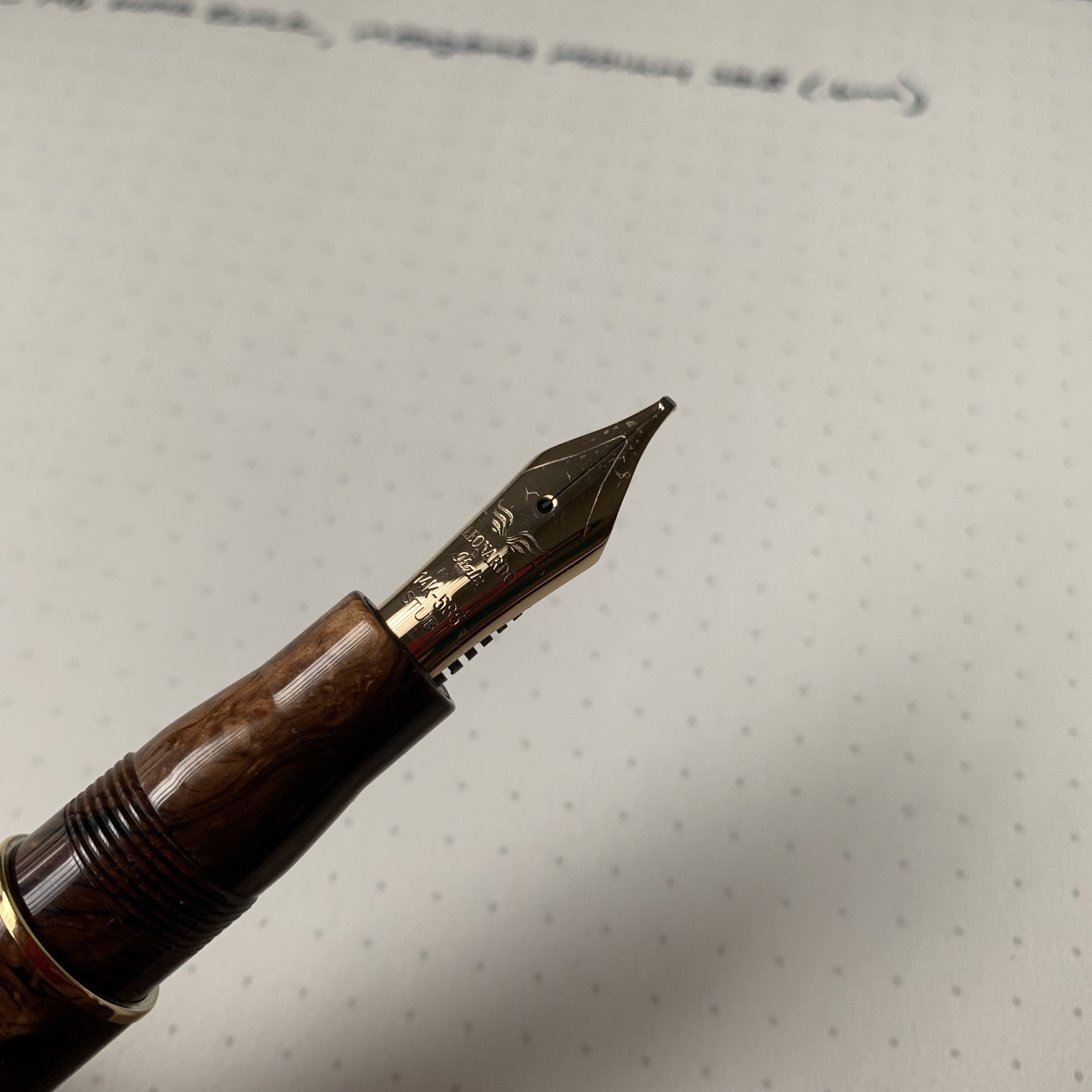
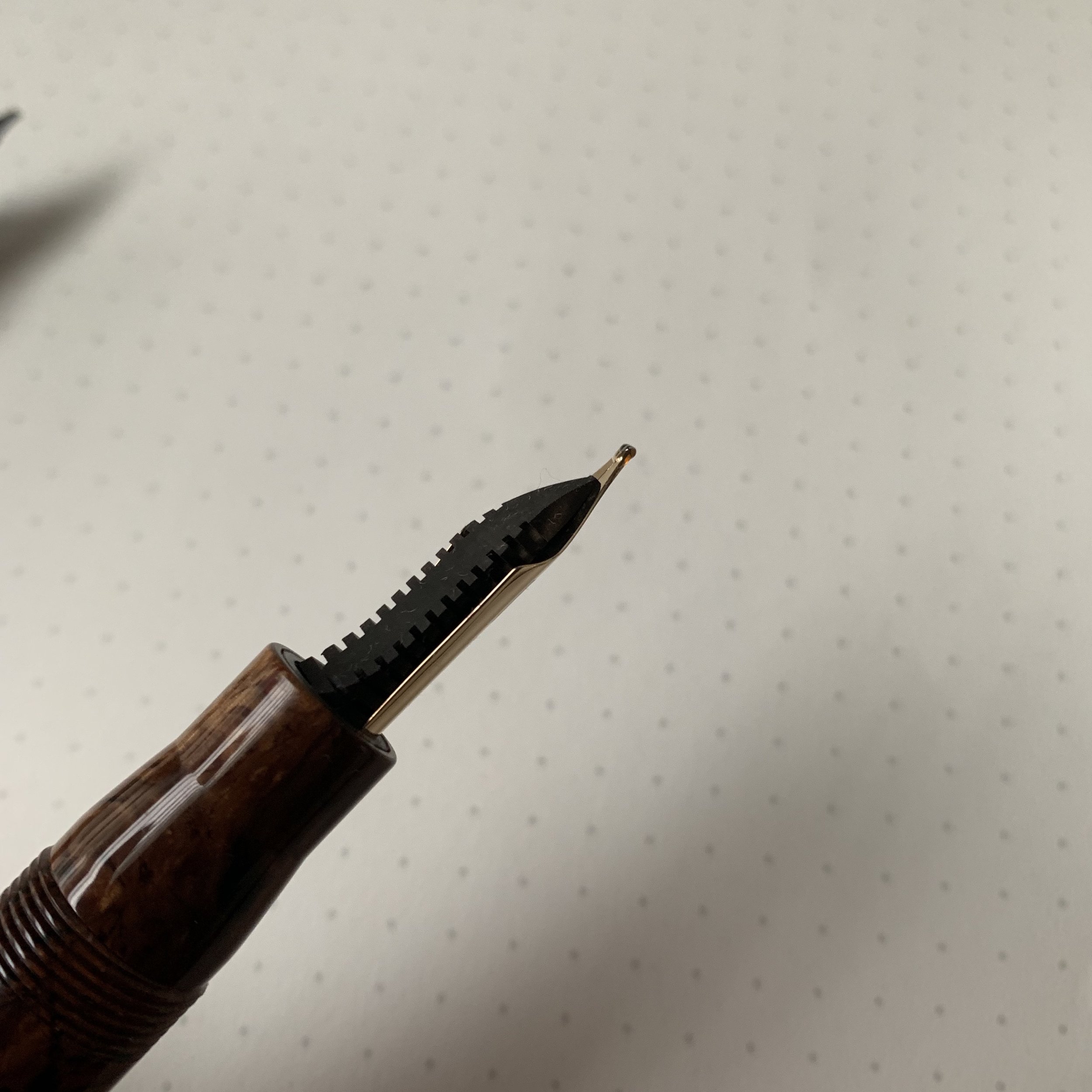
Leonardo Officina Italiana. If you prefer a wider, smoother stub, consider the offerings from a new pen company based in Italy, Leonardo Officina Italiana. I was a fan of Delta pens before that company went out of business, and Leonardo was founded by former Delta employees. The company’s products reflect its heritage, though I’d say the Leonardo pens I own are a step above Delta in terms of fit, finish, and quality control. (It also doesn’t hurt that they have access to some discontinued Omas celluloids, due to a manufacturing partnership with Omas successor Armando Simoni Club.) Though wider than the Aurora stub (about 1.1-1.3mm), the Leonardo nib also features an ebonite feed and writes a narrower line than you would expect, making it another good option for everyday writing. I hear good things about Leonardo’s steel stub nibs as well, but haven’t personally tried them. I acquired the pen pictured here from Pen Venture as part of a three-pen set, and Emy tuned the nibs to perfection prior to shipping.

View fullsize Leonardo Officina Italiana Stub Nib
View fullsize Leonardo Nib and Feed

Franklin-Christoph and Pilot. Two other brands I should mention are Franklin-Christoph, which offers a wide variety of stub, cursive italic, and S.I.G. (Stub Italic Gradient) nibs in both stainless steel and gold. Those nibs are all excellent, and deserve their own article. The other brand I should mention here is Pilot, and in particular the Vanishing Point. Pilot offers a stub (“SU”) nib option for the VP that is roughly the same width as the Aurora, but I haven’t had the opportunity to write with one extensively.

If you’re interested in custom grinds, you can also check out this article, in which I talk about some of my favorite specialty grinds.

Disclaimer: This post contains links to paid sponsors and affiliates. Both pens pictured in this post were purchased by me with my own funds, for my own collection.

In Pens Tags Stock Stubs, Custom Grinds, Stub Nibs, Custom Nibs, Specialty Nibs, Aurora, Leonardo
1 Comment
Check Out Our New Online Shop!
Store Hours and Events
Updated 2026 "Best Pens" Guide
No results found
On The Paper Trail: Live In Nashville Event Tickets Now Available!
TGS_25 Roterfaden Restock Notification
Hierarchies of Fountain Pen Friendly Paper

Join Our Patreon!
Subscribe to the TGS E-mail List

Featured Posts

Featured
Mongol-Pencil-Incense-Cedar-New-Release.jpeg
October 3, 2026
Hands-on with the New Mongol Pencil, Plus My Current Top 5 Woodcase Pencils for Everyday Writing
October 3, 2026
Read more →
October 3, 2026
10-Fountain-Pens-Favorite-Inks
August 22, 2026
Three Keeper Inks: Choosing Inks for 10 Fountain Pens
August 22, 2026
Read more →
August 22, 2026
Everyday-Stationery-Bags
July 25, 2026
What's the Best Everyday Stationery Bag? My Own Considerations and 5 Options for Pen Show Season
July 25, 2026
Read more →
July 25, 2026
The Gentleman Stationer RSS

© Digital Divide Media, LLC, 2014-present.

All content is the exclusive property of Digital Divide Media, LLC, d/b/a The Gentleman Stationer, including “The Gentleman Stationer” website and trademark, and should not be reproduced without express written permission.  All rights reserved.

All content containing paid advertising, affiliate links, or sponsored content will be plainly disclosed by a disclaimer when/if featured.

Contact Information

Website Terms and Conditions

Privacy Policy and Cookie Policy

Accessibility Statement

Legacy Account Login

Powered by Squarespace